Exposición individual
Approved by Pablo & Somerset House
Londres (Reino Unido)
21-27.05.2014
“Futurismo Ancestral”
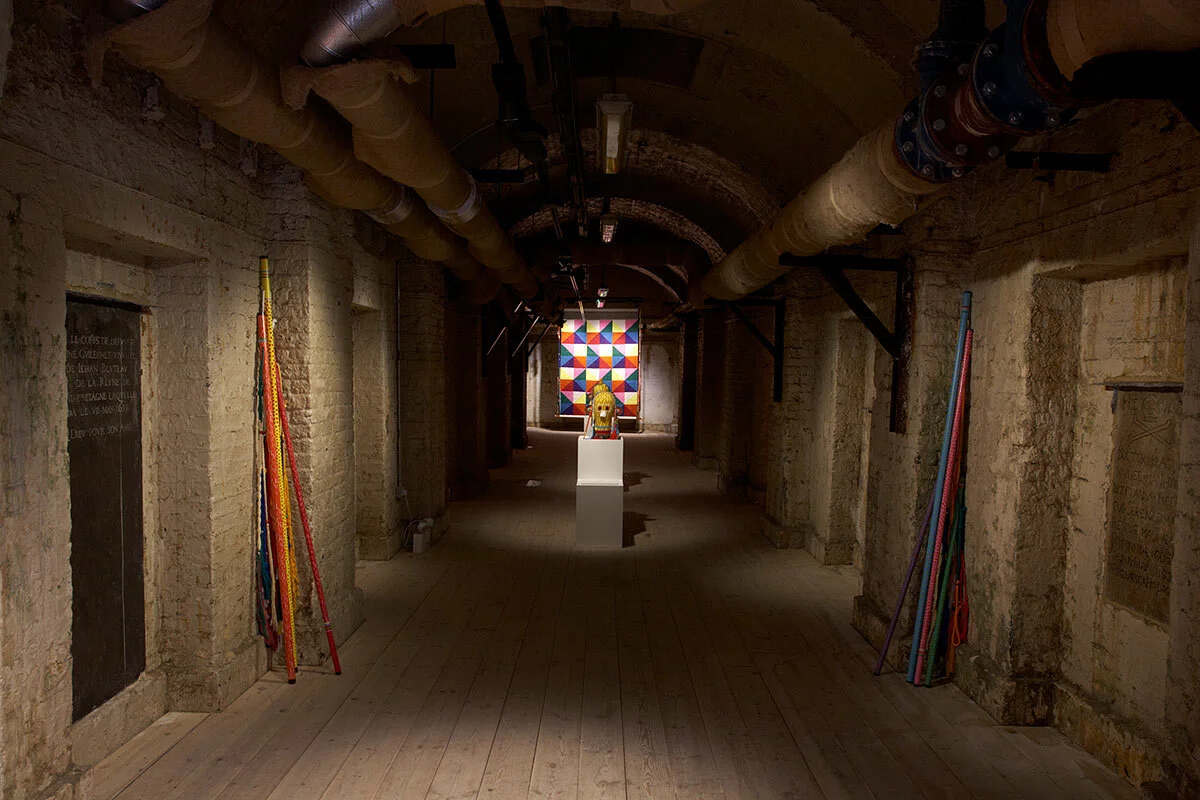
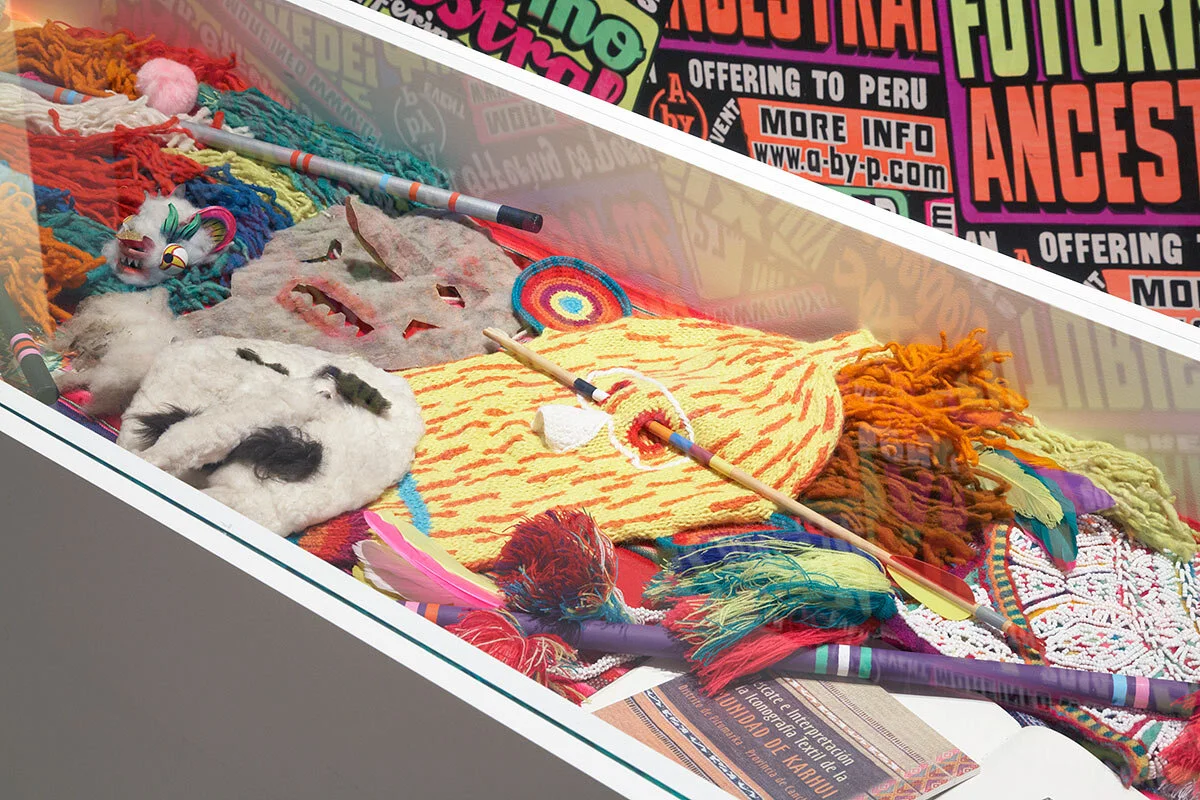
Futurismo Ancestral is an ode to the Peruvian and Andean aesthetics. Since 2009 I have been spending long periods of time in Peru, traveling to different regions of the country, learning about their culture and working with artisans who still work with ancient techniques. Combining tradition and modernity, as a tribute and revalidation of primitive cultures, I created 25 large-scale works including: tapestries, totemic sculptures, ceramics, quipu, masks and “chicha” posters.
We worked with two design studios during this process: Pablo Limon and Savvy Studio, Spain and Mexico.
For production I had the honor of working with Nano4814 and Eltono.
Special thanks to the Anglo Peruvian Society of London, Virgilio Martinez, Makerversity, Kognitif, Montana Colors, Morbo Gallery y NTS Radio, Zenon Gallegos, Luis Nesquin, and Valentino Sibadon..
Catálogo de exposición.
Chicha Posters
Chicha posters are part of the visual culture of Peru, used to announce cumbia music events. Produced in a workshop of Azángaro, a famous street full of printers in the center of Lima, the posters were designed by hand, in actual size, on plain white paper. These designs were used as template for the prints. There were no chemicals or photographic methods used. When printing, the original work acts as the mesh of the screen and, once finished, nothing remains of the original design, so it is impossible to repeat this poster in the same way.
Wall Hangings
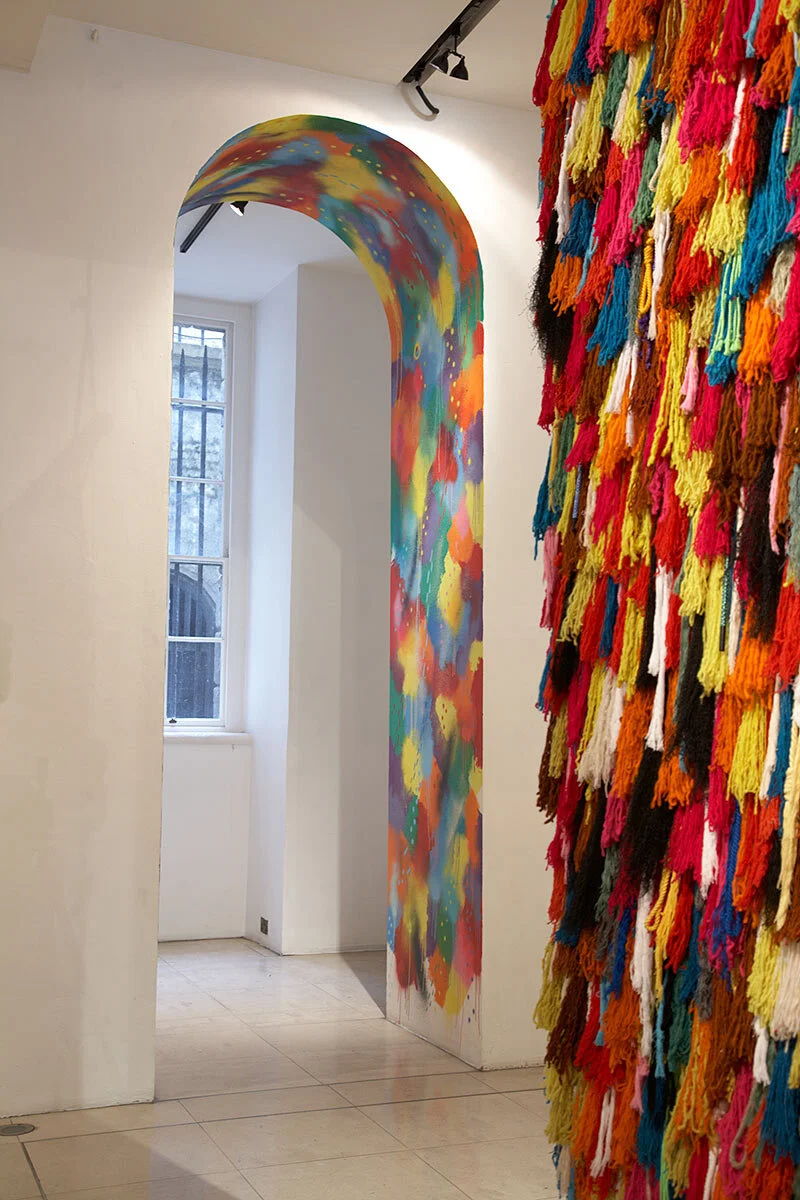
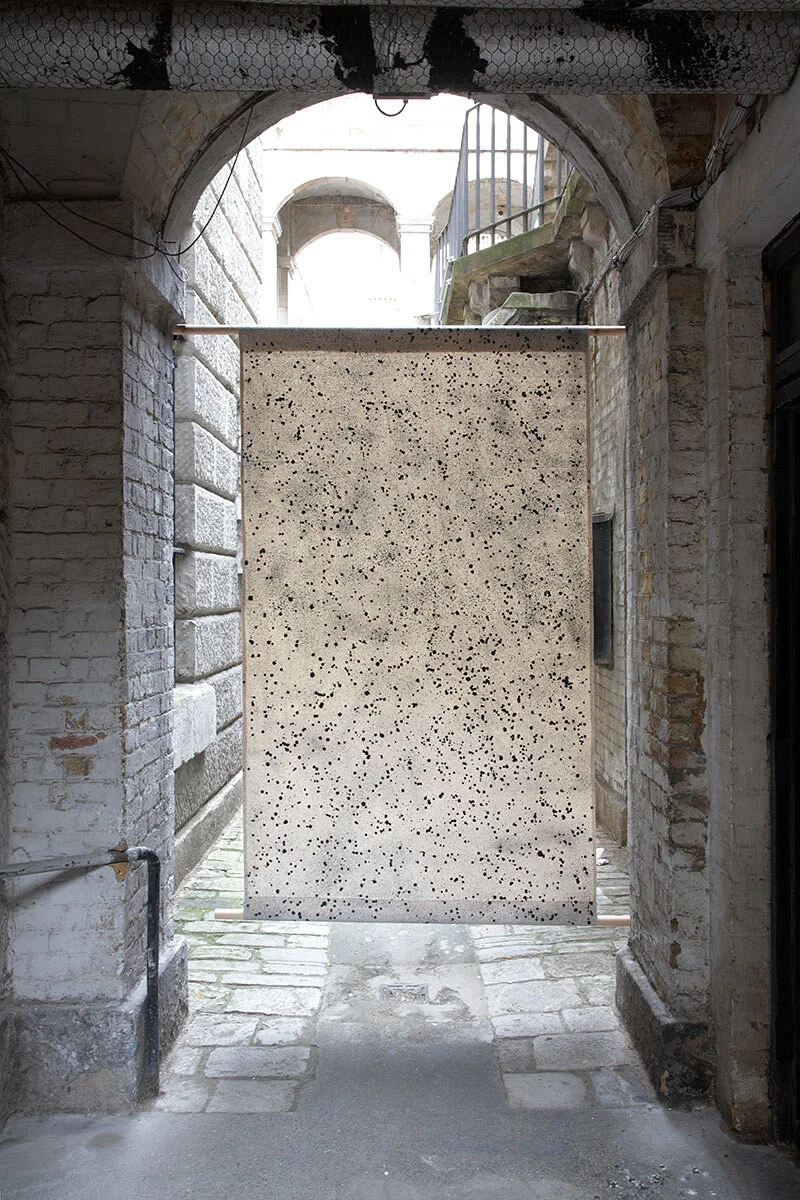
This series of tapestries was produced between Peru (San Pedro de Cajas) and Barcelona. They began as my own geometric designs, but they were heavily inspired by the symbolism of different cultures of the Andean world and the “Wiphala flag” an angular flag with the seven colors of the rainbow, which represents the cosmic reflection of the organization and harmony of the Qhishwa- Aymara community.
The tapestry both woven and hand-woven is the main product of San Pedro de Cajas. 70% of the population is dedicated to this craft and create art with sheep's wool and alpaca fiber. The tapestries are made with great skill, ability and expertise and the designs embody an ancient culture that goes from the figurative (drawings of faces, landscapes of ancient traditions, customs and experiences) to the abstract. San Pedro de Cajas, is called the Capital of Textile Arts of Peru, because for many years the people engaged in carpet weaving, blankets and throw rugs with sheep wool and natural dyes. It is all referred to as the capital because of its geographical location, people have their own herds and draw the wool for spinning, dyeing and other fabrics from them.
The first stage of making these tapices was held in San Pedro de Cajas and Luis Nesquin Pucuhuaranga Espinoza, an artist with a great tradition in the world of tapestry, was in charge. His specialty is hyperrealism, but he dominate many other textile techniques. The second stage of the process was done in my workshop in Barcelona. In this process I worked on the back of the different tapestries made in San Pedro de Cajas, as a cumulative assembly. In these cumulative compositions I used different materials: sheep wool hand-dyed with natural pigments, cotton ropes of different thicknesses and colors and wooden slats painted with different motifs, thus creating different textures and depths. This is an intentional contrast with the other more symbolic side. My idea is to unite two worlds to create a piece that speaks of tradition and of the contemporary, and at its core the union with the Cosmos. This was one of the ways I wanted to validate the early cultures, with respect and admiration.
Mural
Working under the idea of altered states of consciousness, I captured other dimensions that teachers and shamans from around the world have been able to access, with explosions of colors, representing a trip to the divine. This is the starting point for this series of painting titled: Futurism Primitivo.
Instant Photos
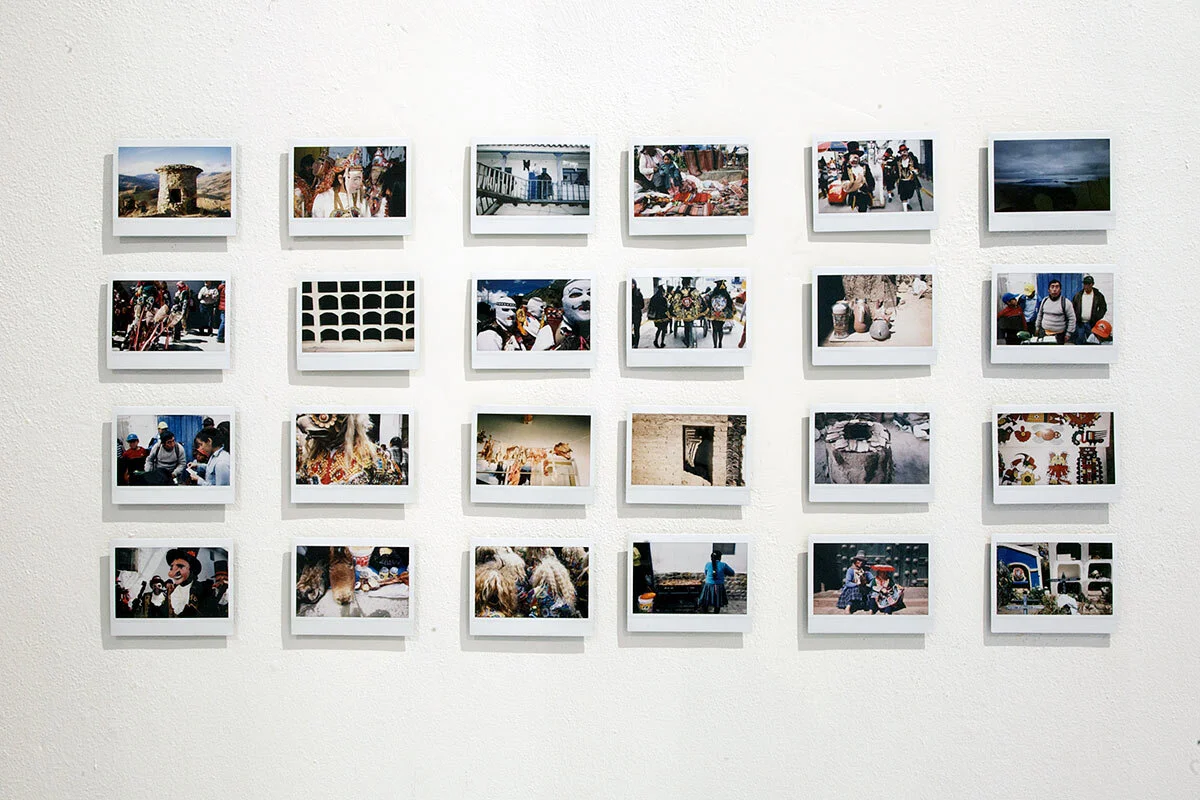
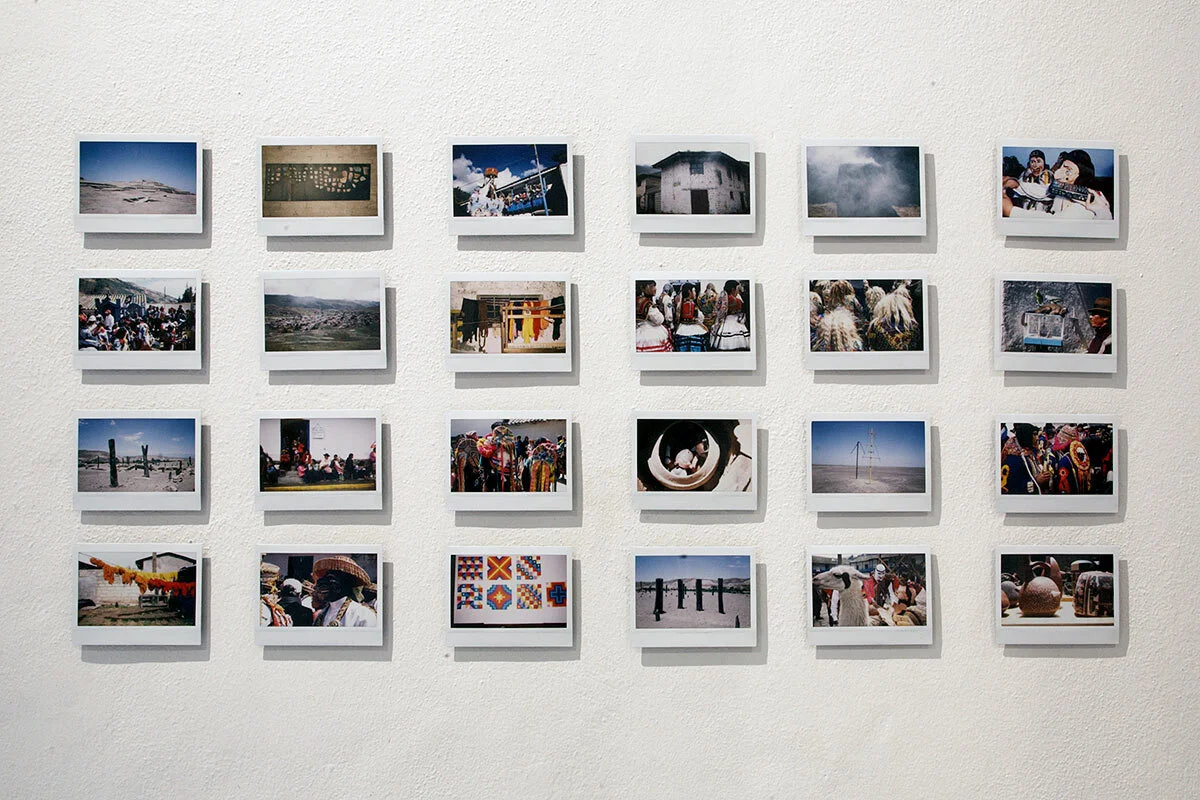
As a type of visual compass I used a Fujifilm analog instant camera to record folklore and magical moments of the different regions of Peru I have visited in recent years.
Three dimensional door
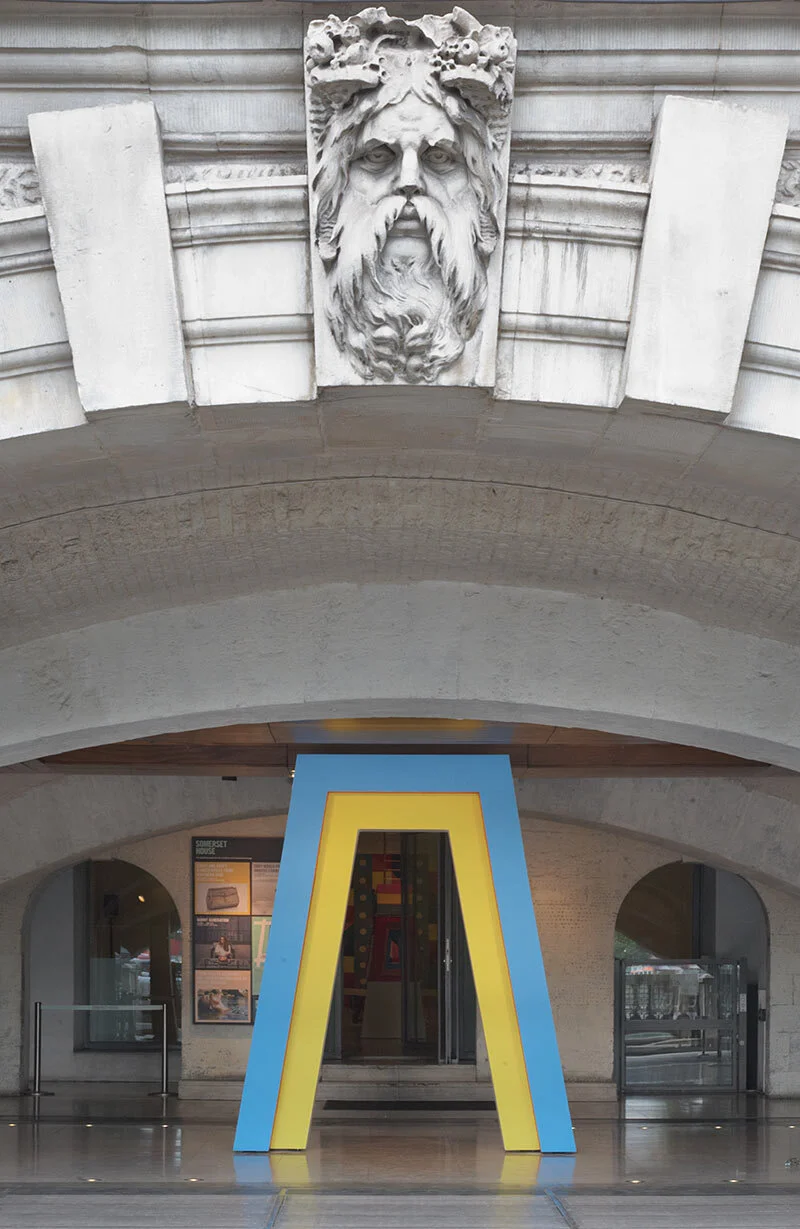
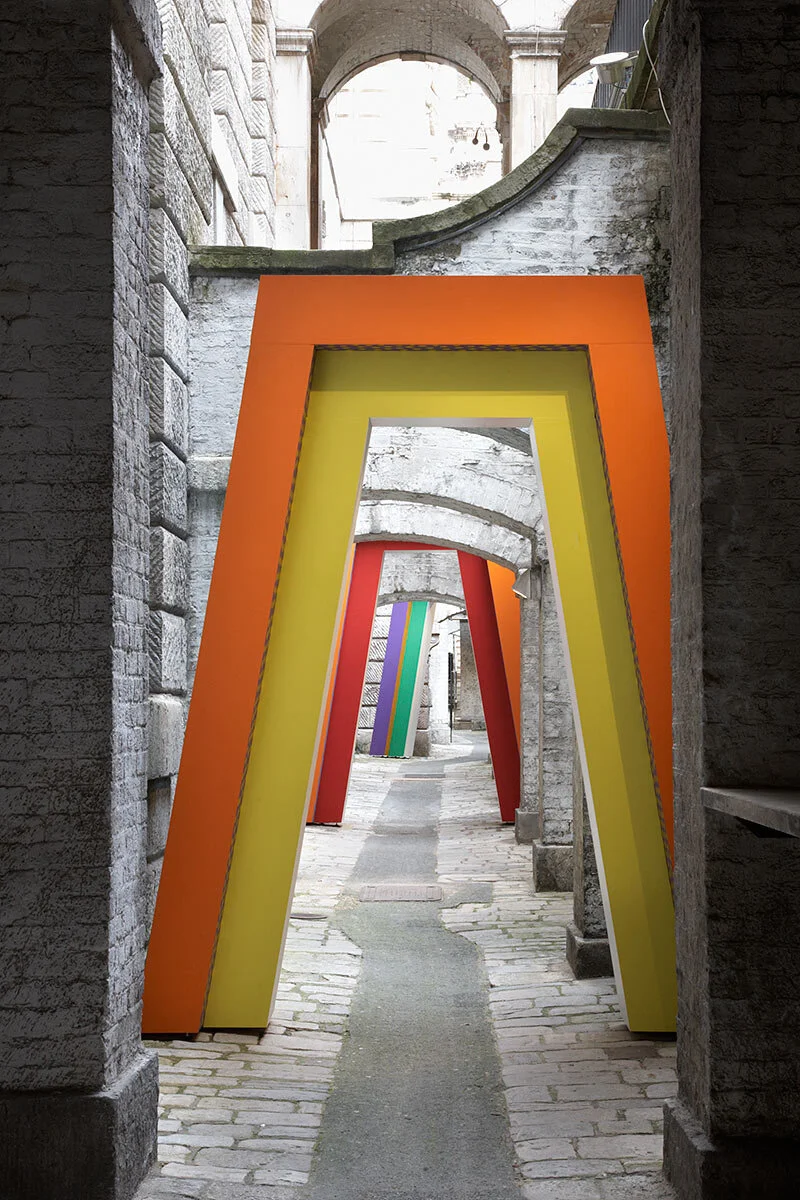
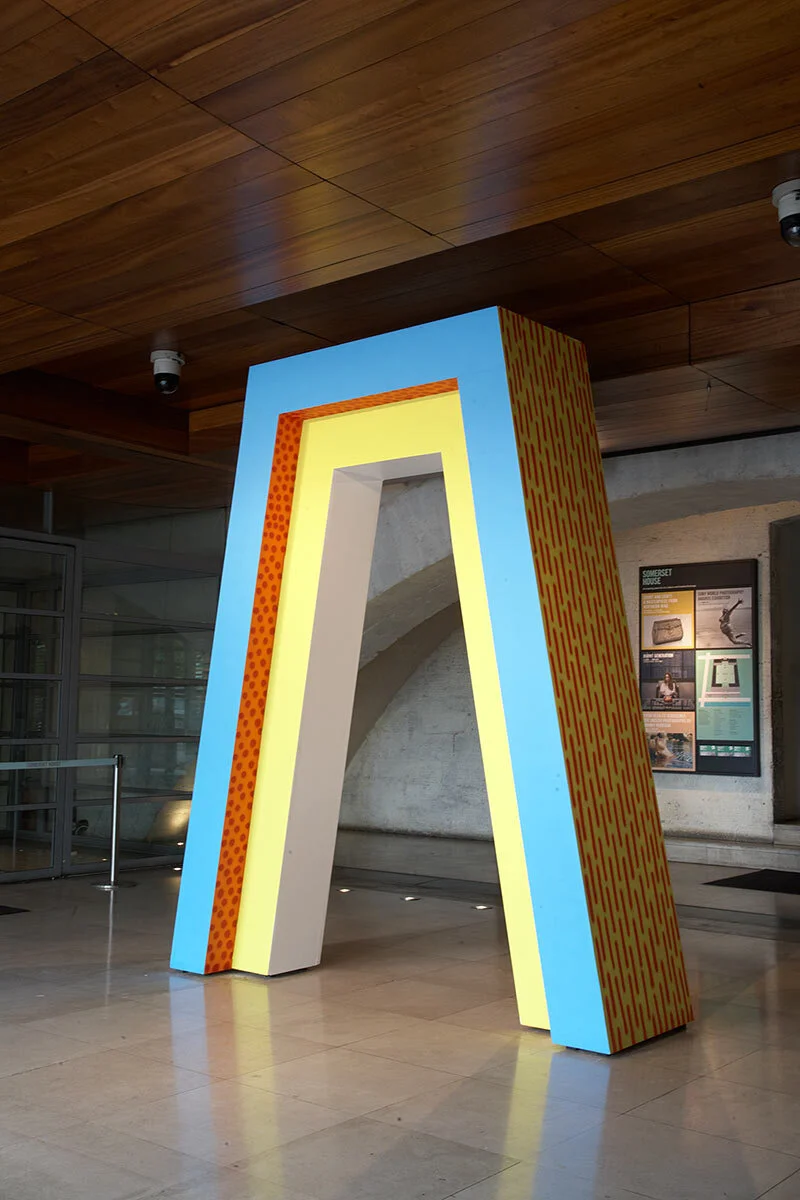
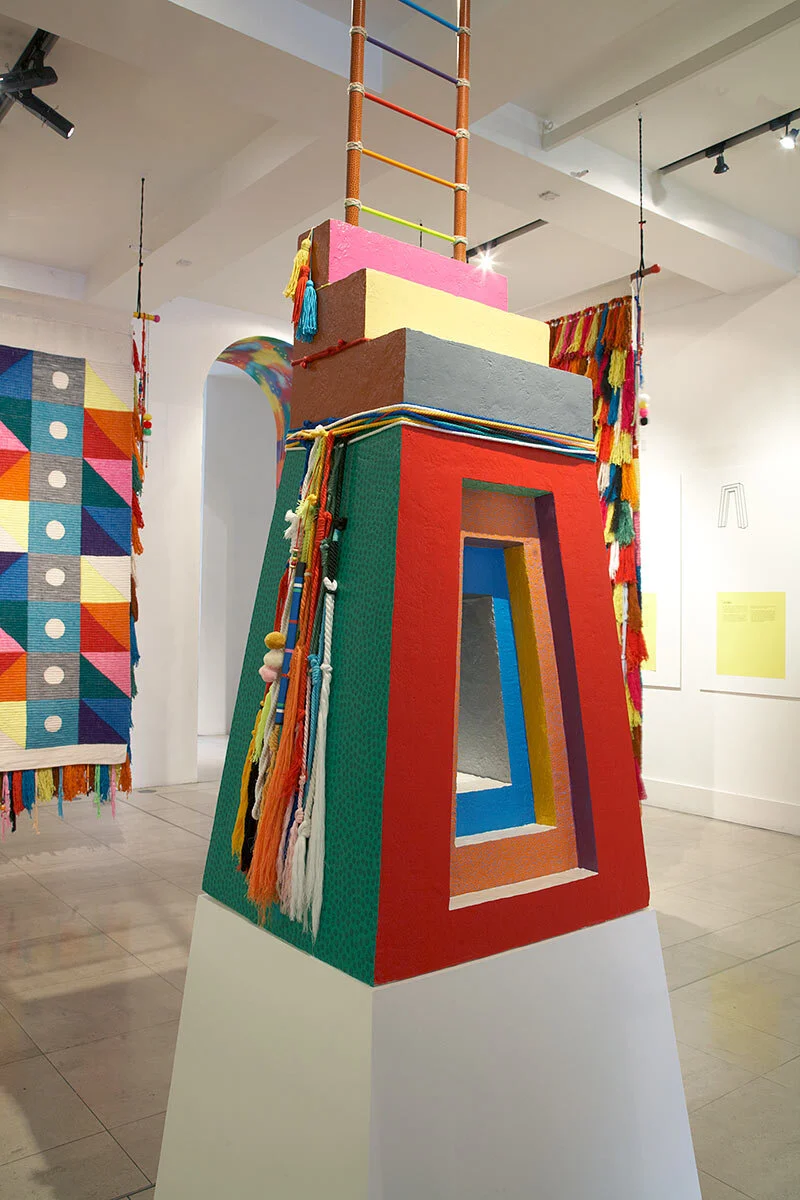
There are several elements that can convey the idea of transcendence or access to different dimensions, the most significant for me are: doors, stairs and in the Andean world "Chakana". This form is interpreted as a bridge or cross and is formed by four steps - three superior external steps and two inferior internal ones. The external superior steps correspond to the ideal word, top outer world with with the right staircase referring to the cosmogony, and the left staircase explaining the theory of three worlds.
Andean cultures have represented the Chakana in many engravings, stone carvings, monuments, fabrics, ceramics, ornaments, potteries and symbols. The most emblematic symbol used to represent the constellation is the Cruz Escalonada Andina (Andean terraced cross) or Chakana. This symbol occupies a central role in ritual expression amongst Andean populations and can still be found today in ceremonial and sacred events.
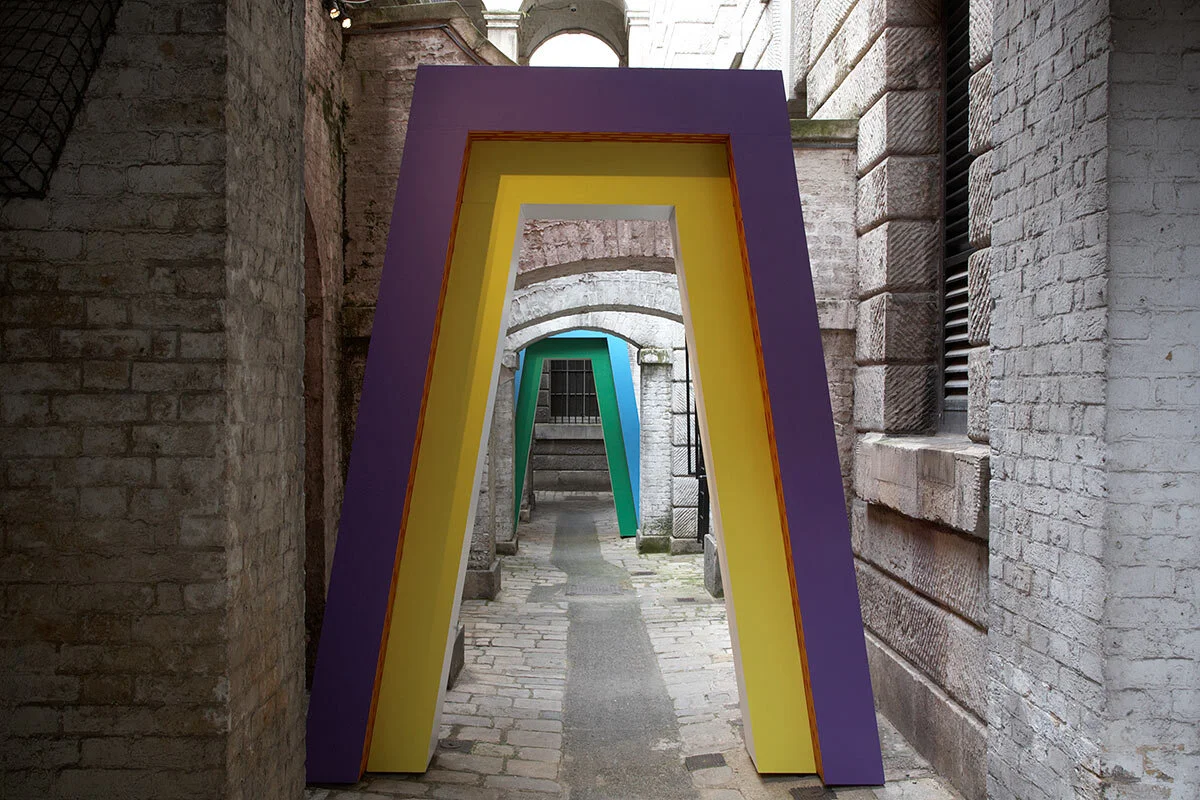
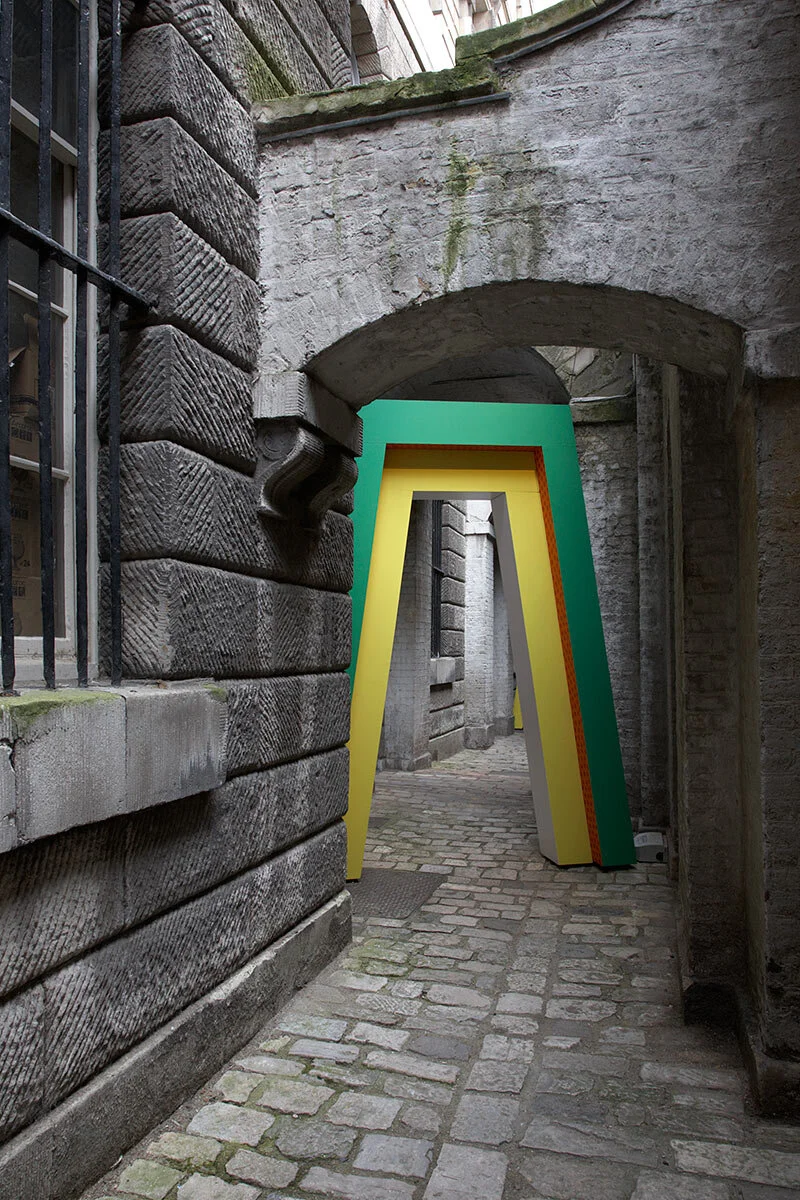
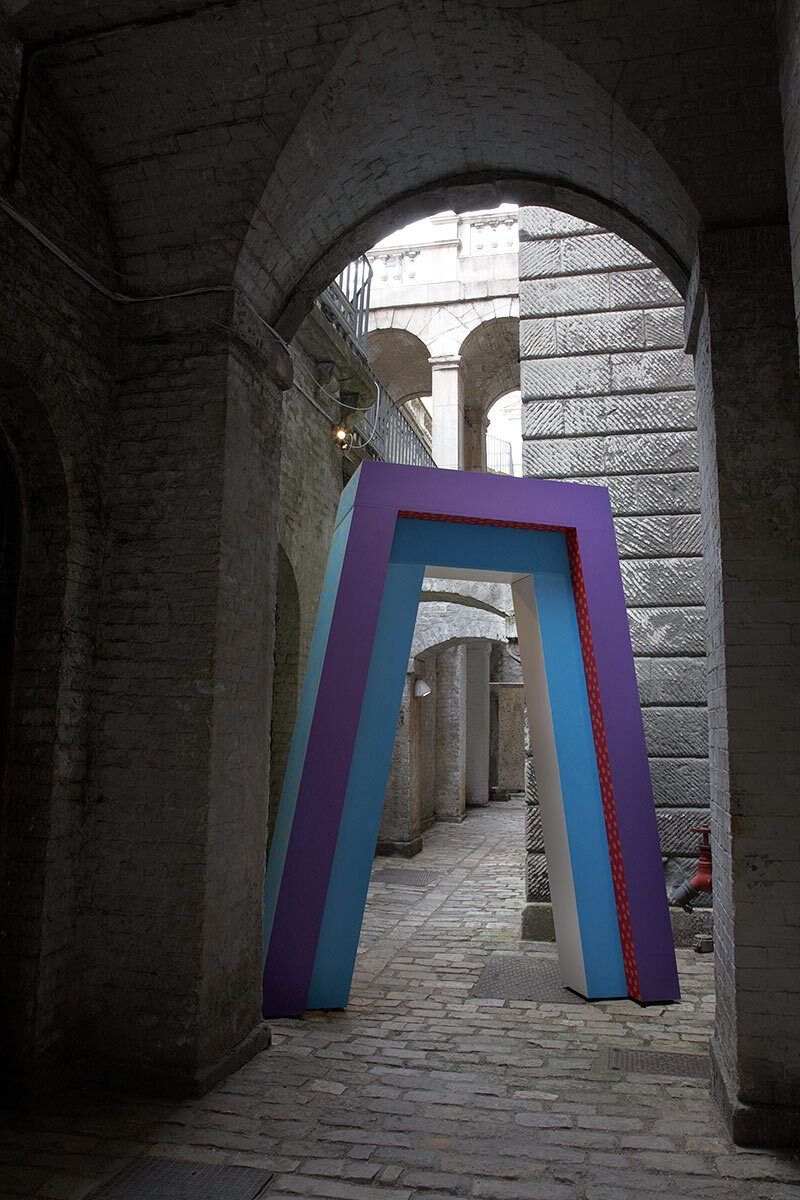
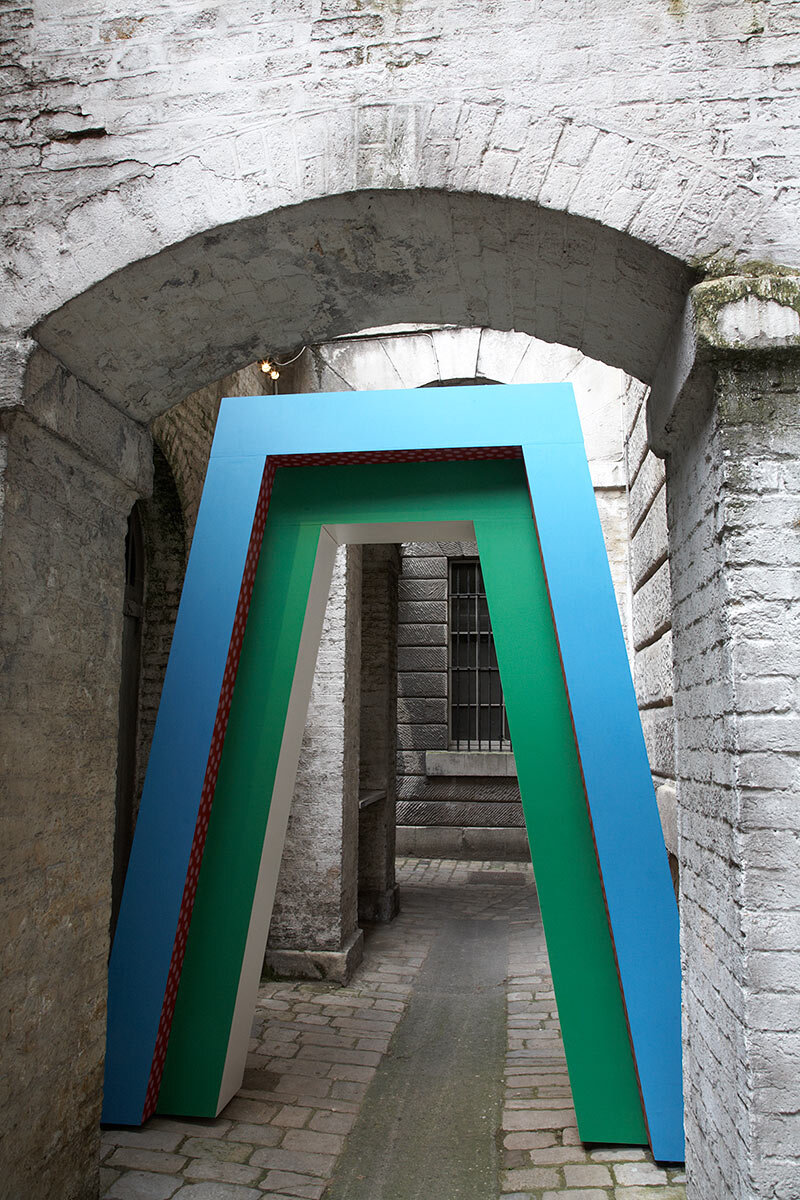
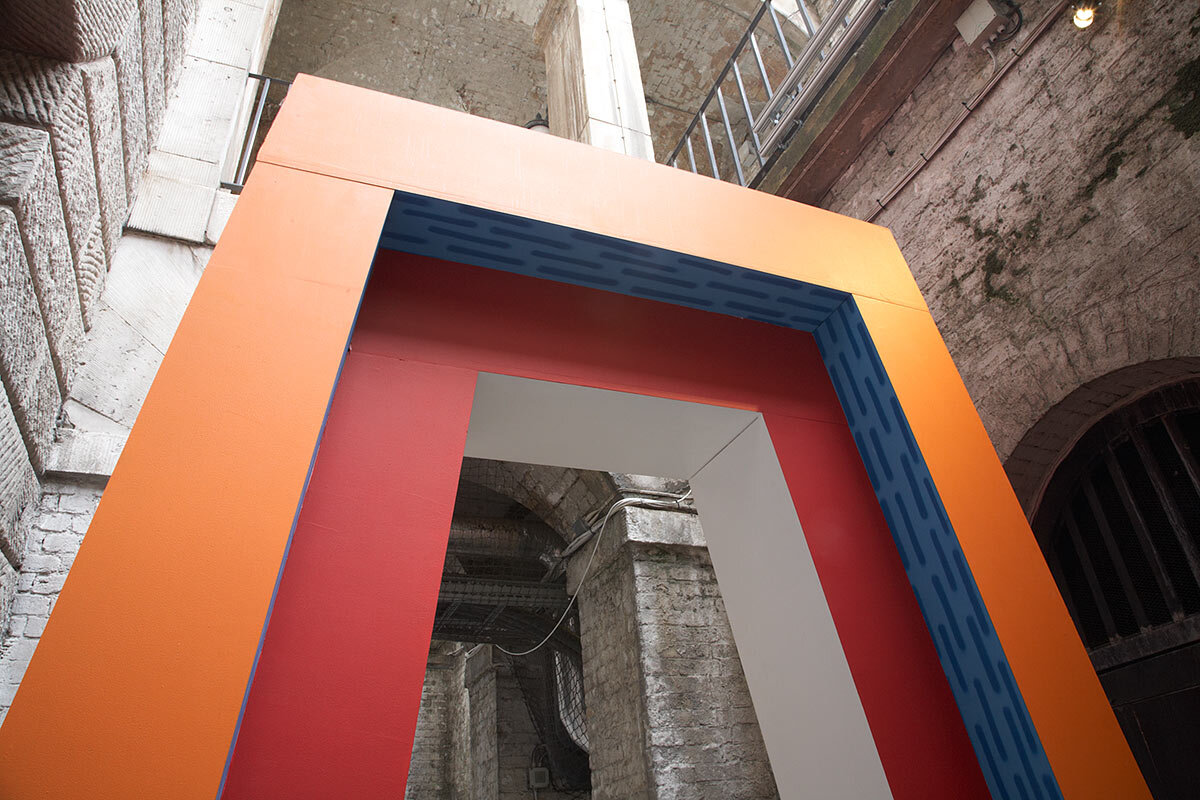
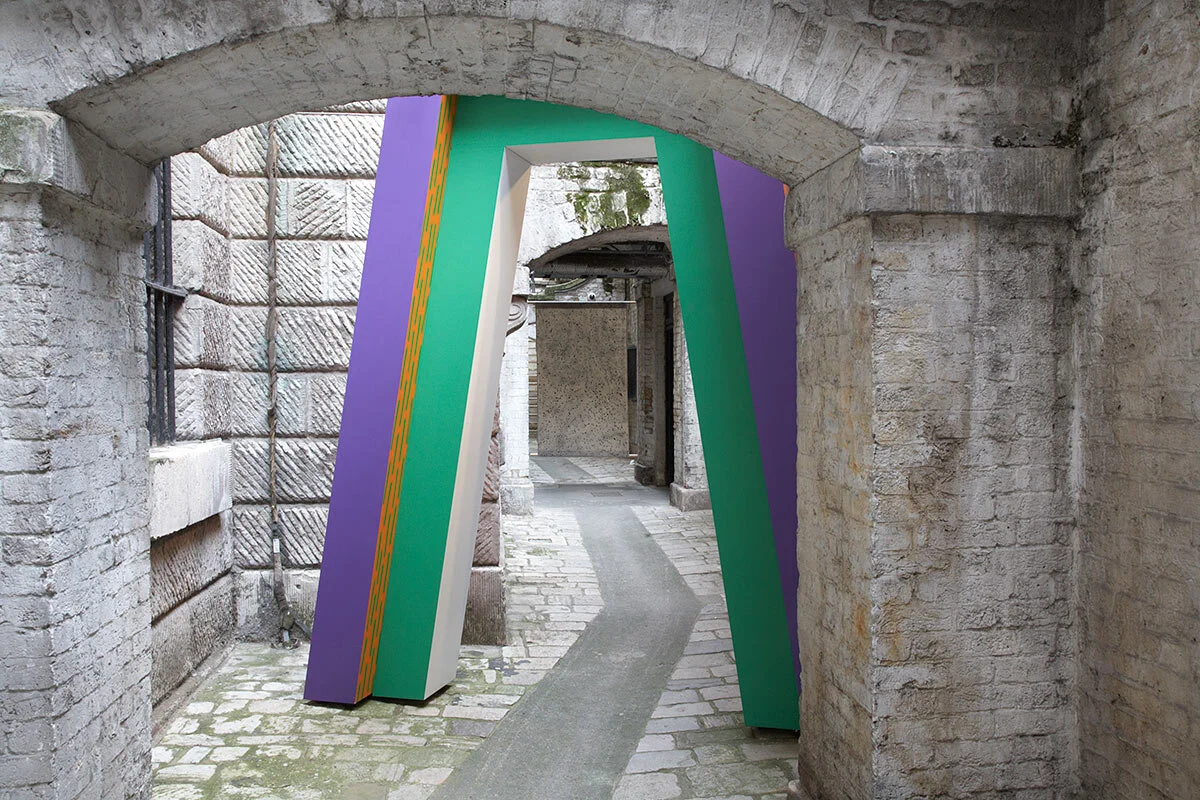
With these three concepts I created this sculpture in Barcelona, as a dimensional door. This door has three sections that compose door chakana and stairs. These three transcendental objects linked together, raised the idea of transportation to other dimensions, combining different ideas under the same concept.
On my arrival to London, we designed and built six large scale versions of these door or puerta sculptures. Like the smaller sculpture, these objects act as doorways into different dimensions, here taking us from the secular space of the Great Arch into the sacred space of the Deadhouse. They function as a rite of passage, a camino from one world into another.
Masks
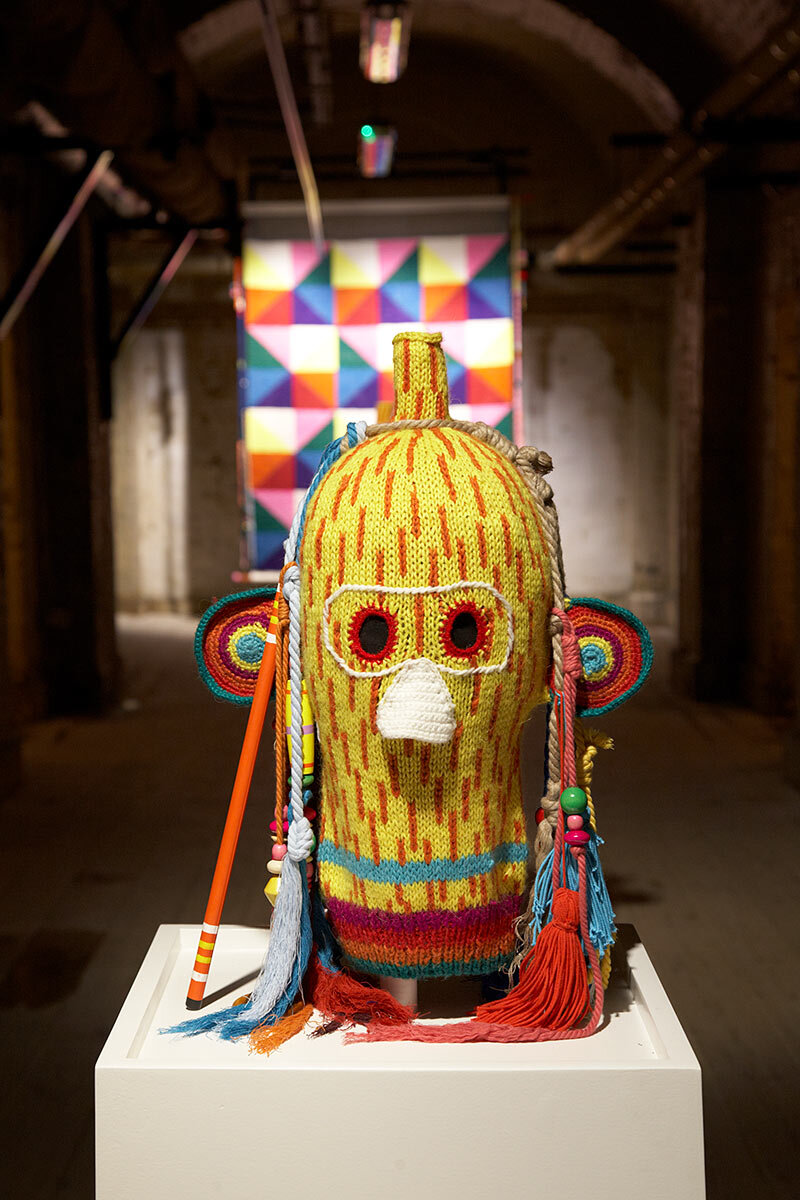
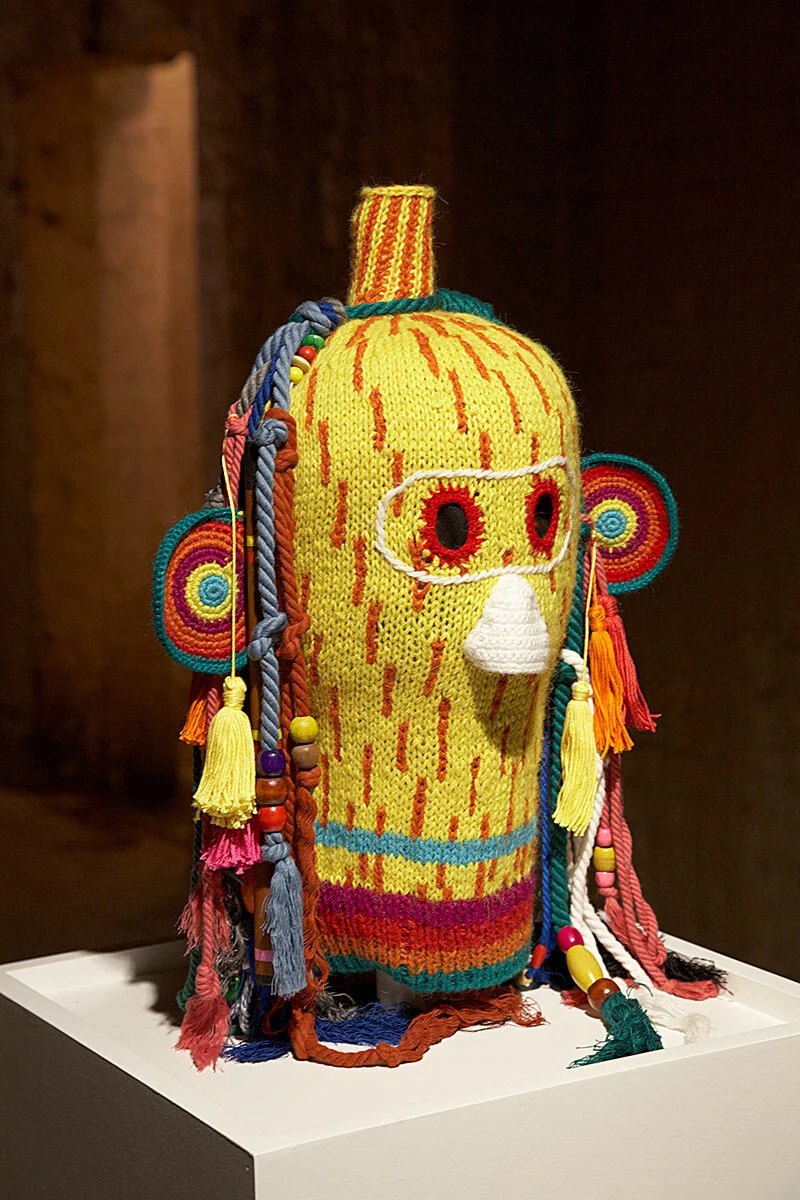
As a cultural heritage of Peru, the mask represents "religious magic" that helps with the development and permanence of the "immaterial", also called the "intangible". The mask is a key element that helps prepare the environment and human events that surpass the material, causing the magic of the supernatural to become a reality, which is expressed and felt during the ritual or dance during both festivals and funerals. This series of fifteen masks were made in Peru, by artisan Vicentina Espirillala with the help of by Maria Julia Sara Lafosse, in the city of Arequipa in southern Peru. Once again I was inspired by the idea of flying to create these designs. Using the color yellow which is one of the colors I use the most in my painting palette as symbols of the great Sun God, re-creating an imaginary dancer who invokes the most ancient tribalism.
Quipus
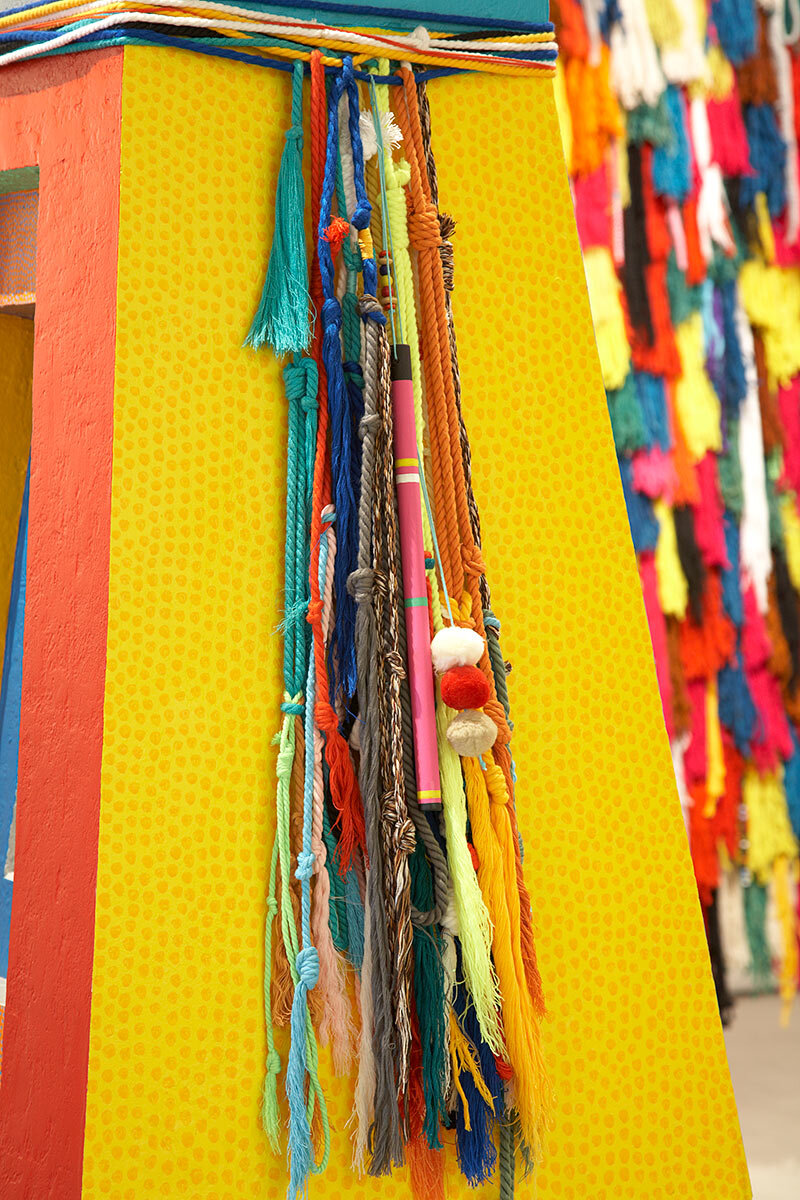
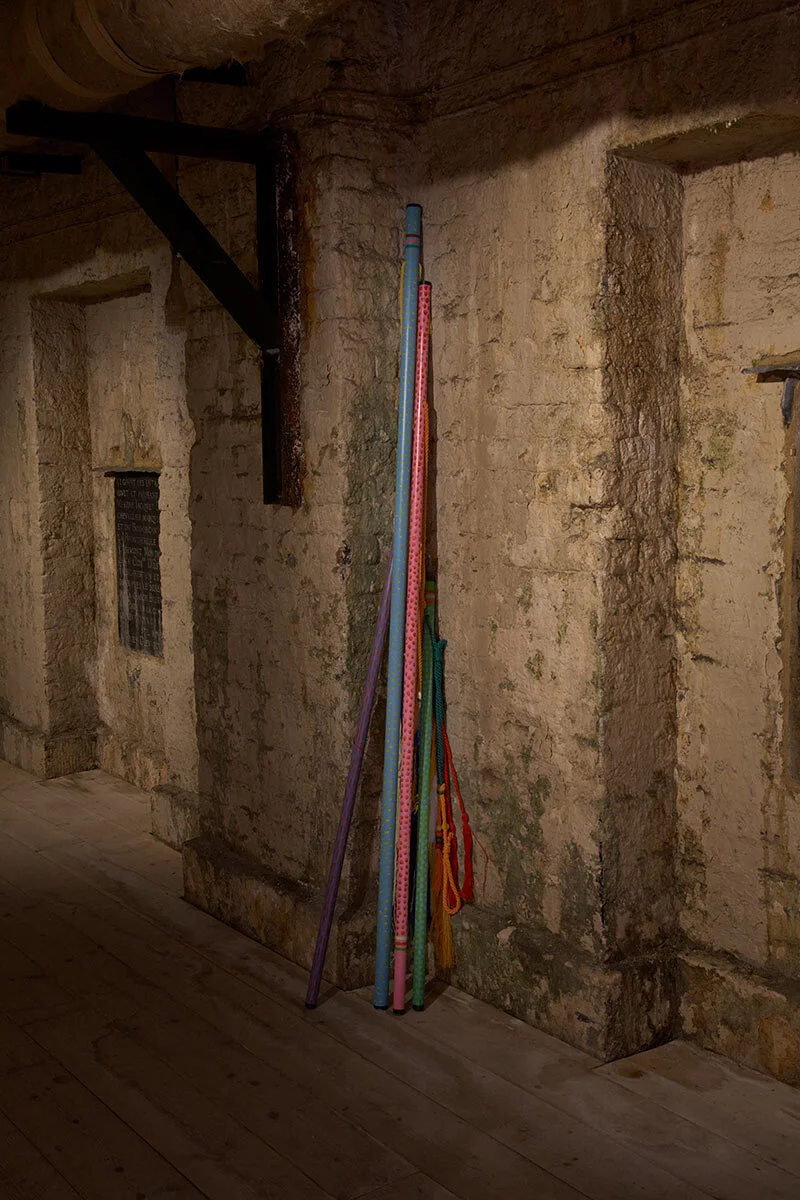
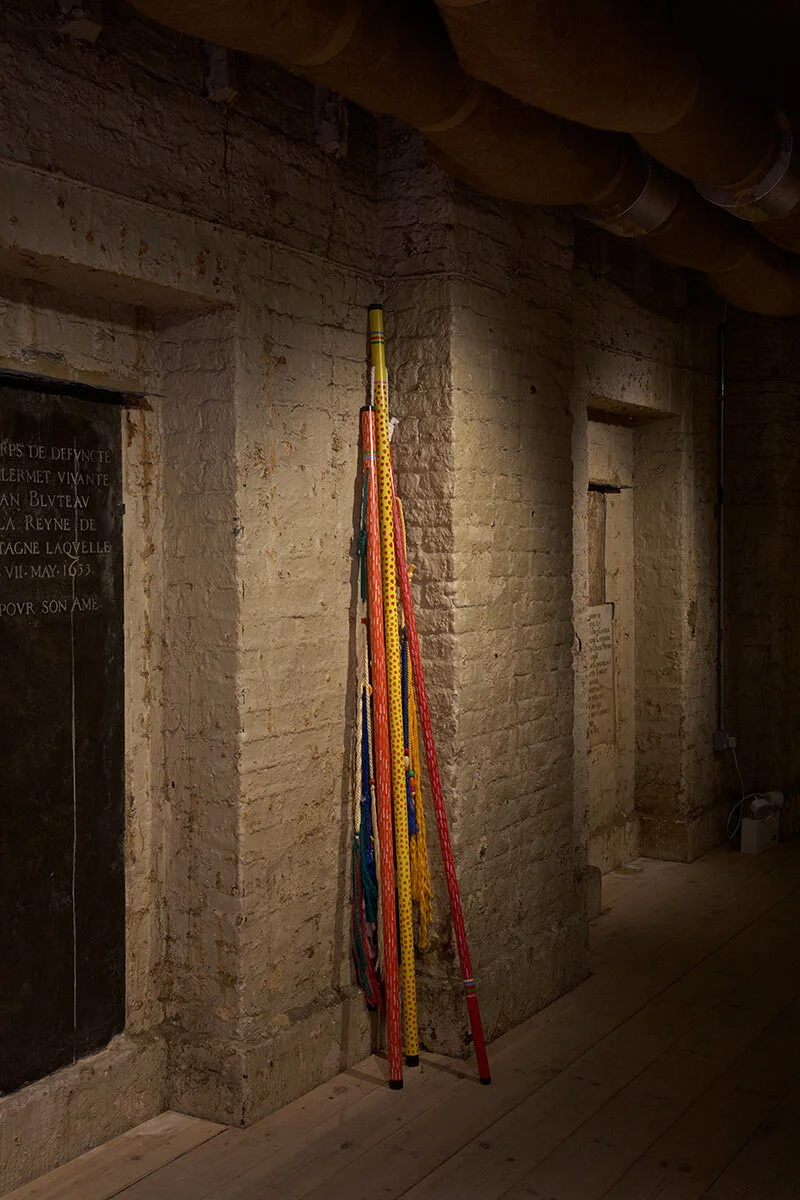
On first arriving in Peru, I was made aware of the existence of the artefacts known as quipus (or khipus). I became fascinated by their great beauty as well as by their intricate meaning and significance.
Within the Inca Empire, Quipus were a material device from which both the economic and social aspects of society were recorded. The quipucamayoc (a specialist who elaborated, read and archived the quipus and who had prodigious memories), would record the location, demographic and economic data of a local community, subsequently sending these to the Inca Empire’s administrative centres for collection. Through this, the officials were then able to redistribute excesses of wealth to the less prosperous communities.
Quipus were made of knotted chains of llama and alpaca wool or from cotton. The quantity and position of the knots indicated numerical values in a decimal system. The colours of the cord signified what was being counted, and for each activity (agriculture, military, engineering, etc.) a symbolic system associated with colours existed. Whilst it has been demonstrated that the majority of the information contained in quipus was numerical however, there are strong suggestions that these objects also elicited linguistic, lexical information. The quipus thus acted as a form of proto-language, a sign-system in which complex narratives could exist.
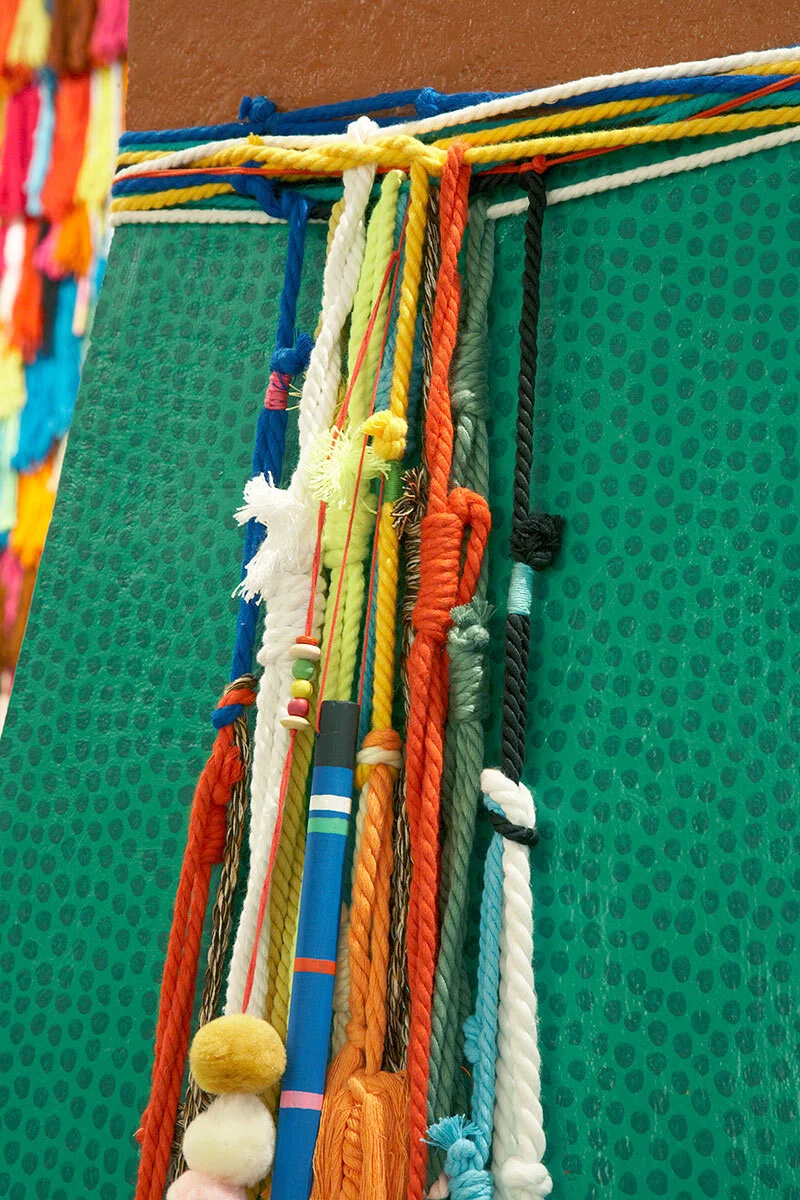
With this series of quipus made in my Barcelona studio, I wanted to emphasise the beauty of this great medium of communication. I wanted to show it through a contemporary lens and at the same time to reaffirm a crucial element of indigenous Andean culture. For their production, I used the style of knotting used by the quipucamayoc, however I also incorporated other techniques; for instance, the frayed knots and elements placed upon the cords acted as a reference to the danza de la soga (or rope dance) of the Mochica culture. I also included wooden beads which represent a numerical system using several colours, shapes and linear symbols. The whole quipu is also supported by a fastening bar, something which although it is not overly common in ancient quipus, is an element which has been noted.
Ceramics
This series of ceramics was produced in Nazca, Peru. The Nazca culture is famous for two things; its vast geoglyphs made in the highlands of the desert, and its culture of ceramics.Traditional Nazca ceramics were made with the finest clay and polished with great care. Although the shapes they were formed in never had the versatility of those found in the Mochica culture, Nazca ceramics were unsurpassable in terms of their use of colours and pigments, all extracted from local minerals. It is said that the ceramics from this area are the most pictorial and figural of those found in Peru.
I worked in the ceramic workshop of the Gallegos family with the master craftsman Zenon Gallegos. Zenon is the son of the great Gallegos Ramirez, one of the main figures behind the rebirth of the Nazca ceramic technique. For generations, the Gallegos have maintained this millenary know-how inherited from their ancestors. Over the period of two residencies in Nasca, I produced five ceramics following Zenon’s expertise. I worked within the original shape - the oval pitcher with spout handle – using a terracotta plate as a wheel (artesans work without a wheel in numerous areas of Peru). In making these ceramics, I started with the myths of winged beings that permeate many cultures of the ancient world. I used one of the most recurrent characters in my work – this being birds - synthetising this fusion in the beak and evoking the idea of the celestial as well as the lines of Nasca.
After the baking, and following the local tradition, one of the ceramics was offered to the great Cerro Blanco, a sacred mountain of the Nasca culture which is also the world’s highest sand dune. Ceramics offerings have been made to the Cerro Blanco for the past 1500 years. This offering was conducted by Iván Gallegos, a master in many aspects of Andean culture.
Totem
During my last journey on Peruvian land, I created installations in various regions of the country. The first one was made in the Nazca desert near the ceremonial centre of the Cahuachi. The second installation was produced in the Lurín district (in the province of Lima) near the great temple of Pachacama. Titled Ofrenda Celeste or Celestial Offering, these installations were made in conjunction with the Peruvian artist Valentino Sibadon, more commonly known as Radio.
As a site specific installation, Ofrenda Celeste acted as a mystical game with the cosmos and an interaction with Wholeness. The project started in the telluric vastness of an empty space, in which the totems acted as energy accumulators where multiple manifestations would converge.
The works exhibited here however were produced in Barcelona, using hand dyed wool from Peru. Titled Ídolos or Idols, they are rooted conceptually in my installation project but here introduced into a new space. In this context they thus function as accumulators of offerings. These offerings are made with knotted cords following the same technique used for the quipus, tales of wood made of numbers and linear symbols.
Divided into two bodies, they refer to the world of the celestial and the divine, recreating the sensation of a centre of worship.