Solo show
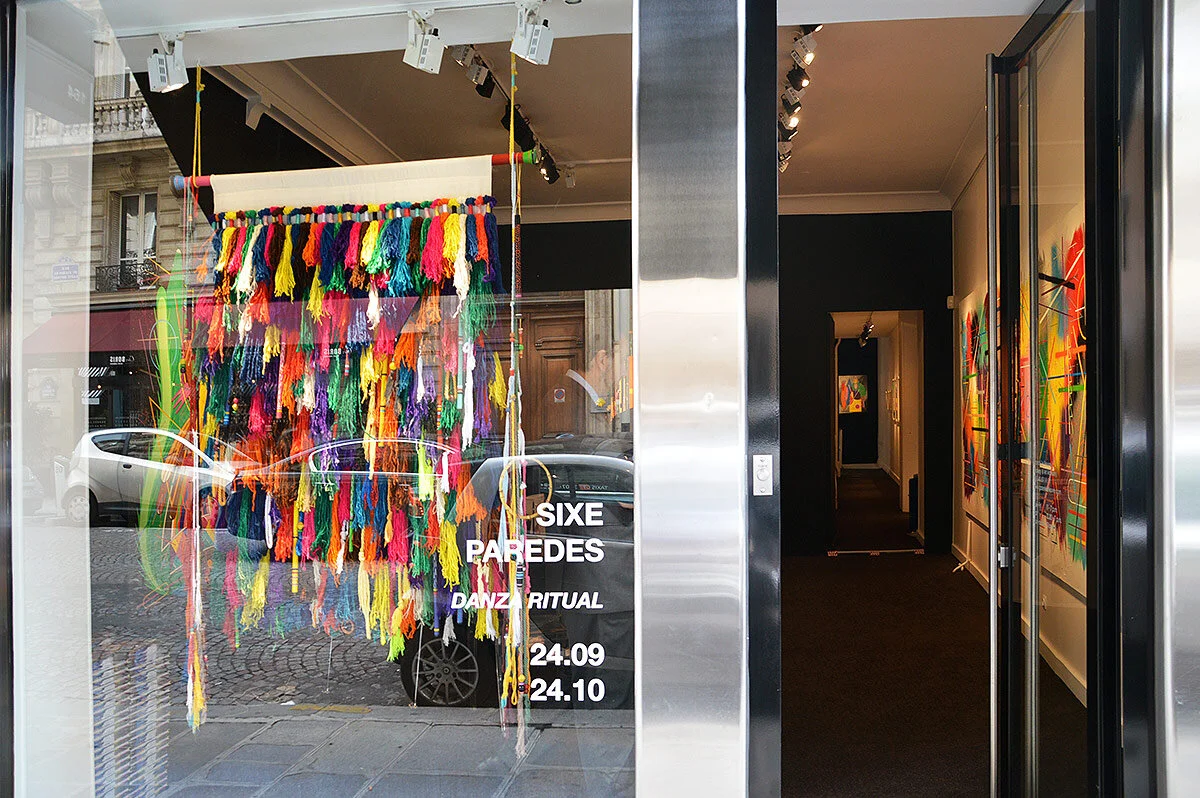
Espacio Le Feuvre & Roze
París (France) 2017
24.09.2015 – 24.11.2015
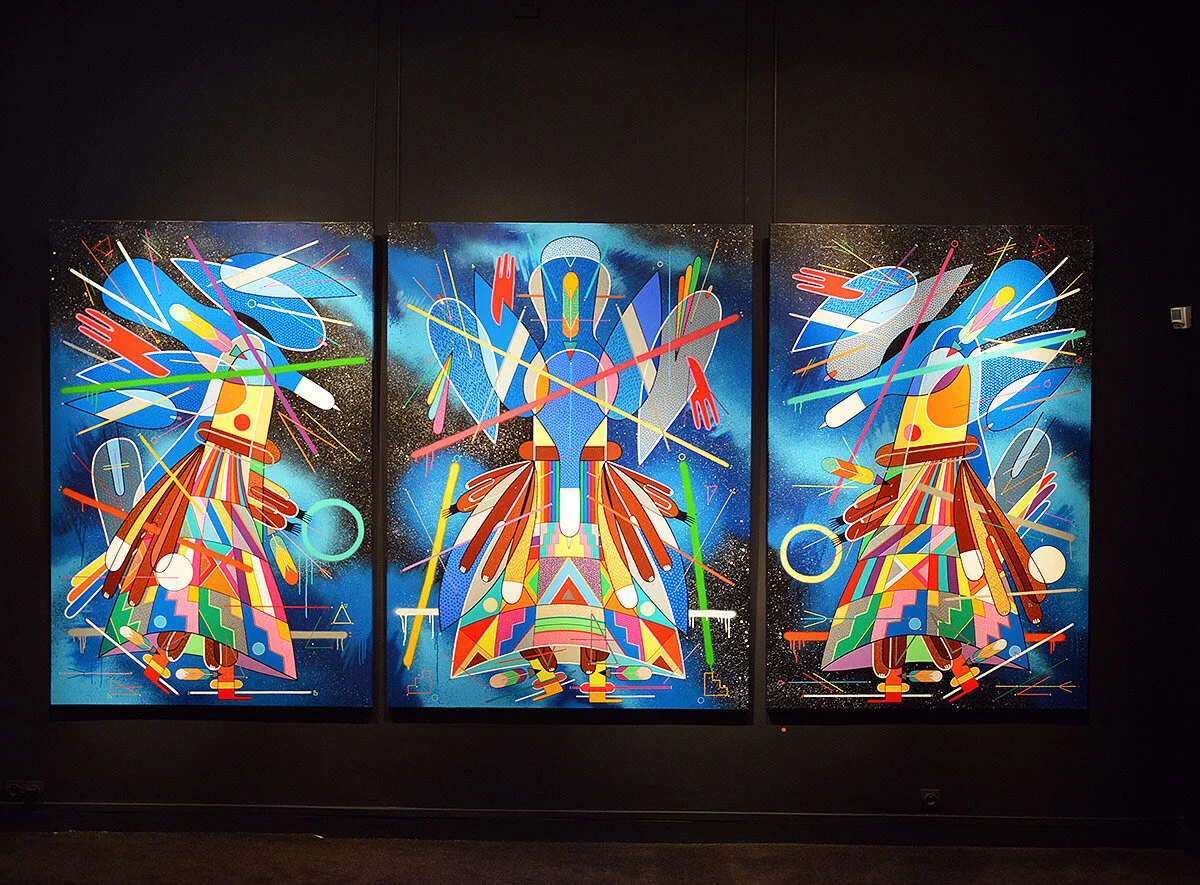
“Danza Ritual”
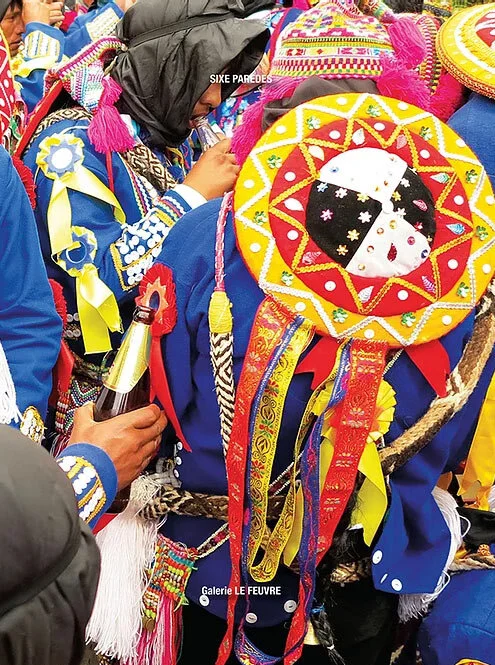
Catálogo de Exposición.
Formato 21 x 26 cm
84 páginas
Tapa dura
Edición Galerie Le Feuvre ISBN: 978-2-918330-28-8
Inglés, Francés y Español
Disponible aquí
Dance has been with us since our origins and it has been changing and mutating since it began right on up to the present. Through dance, countless people all over the world have been able to express their most mystical concerns, those which are hidden in the depths of our being and cannot be verbalized but expressed only through gestures or movements.
These visionary visual experiences, united between heaven and earth, that convey a world of deep introspection, and generate an explosion of colors that blend in different dimensions, to transport us to new universes.
Looking at ritual from a contemporary standpoint, it can be seen as a combination of elements which organize our thoughts and worldview and eventually become a key that opens the door to new paradigms and dimensions. Like symbolism, which as a human reflex embodies experiences, ritual leaves a permanent mark in codes lost throughout time. Searching for a not too distant past that remains close to ourselves, burned into our innermost being that somehow never disappeared but changed along with our existence from memories converted into action – ritual is visible in our day to day lives even when we don’t realize it, we are blind to this world that is left further and further away each day.
For this new show, I worked with the following disciplines and concepts.
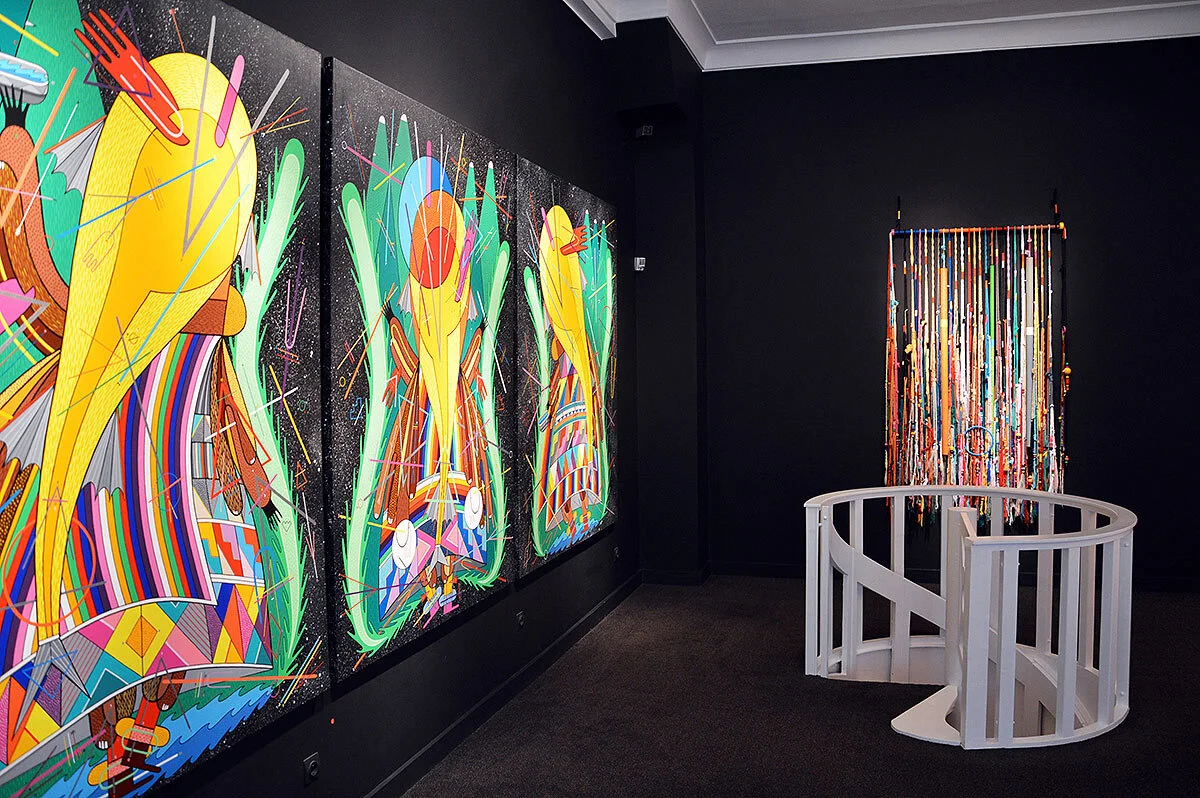
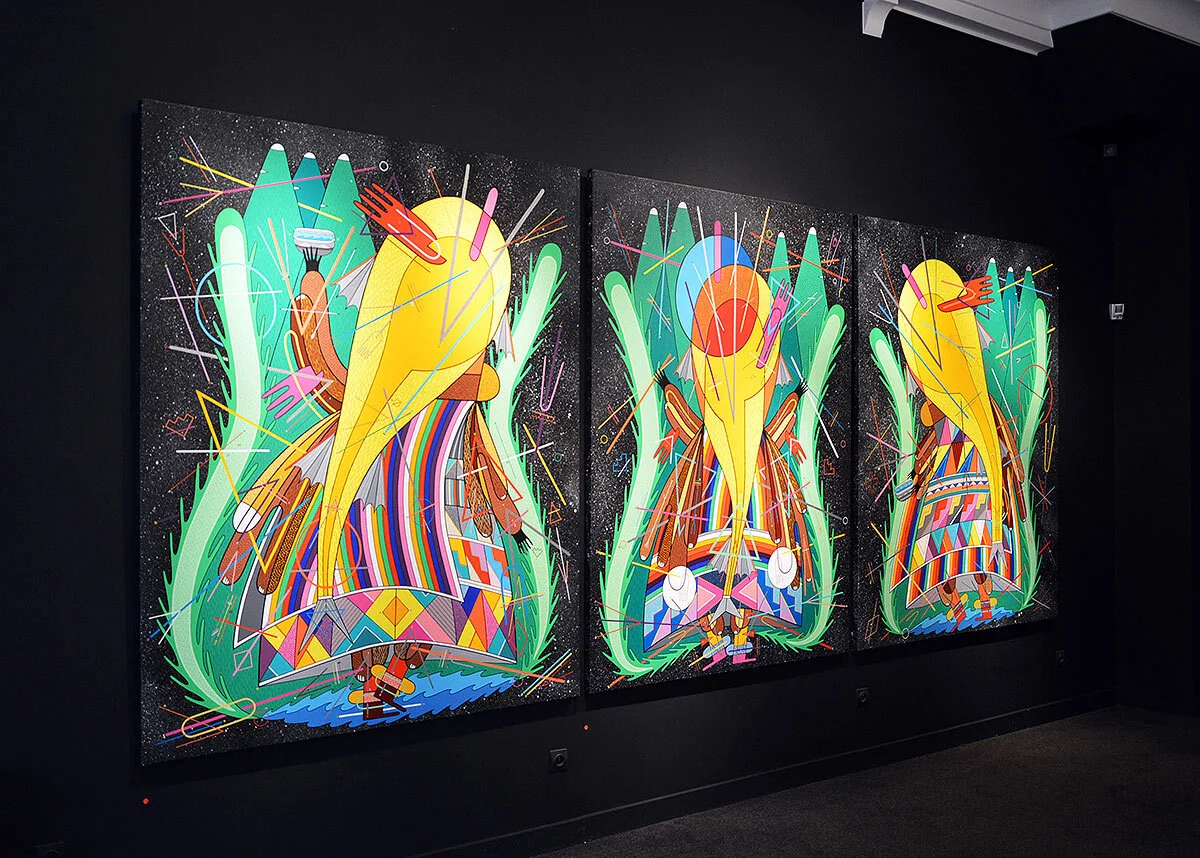
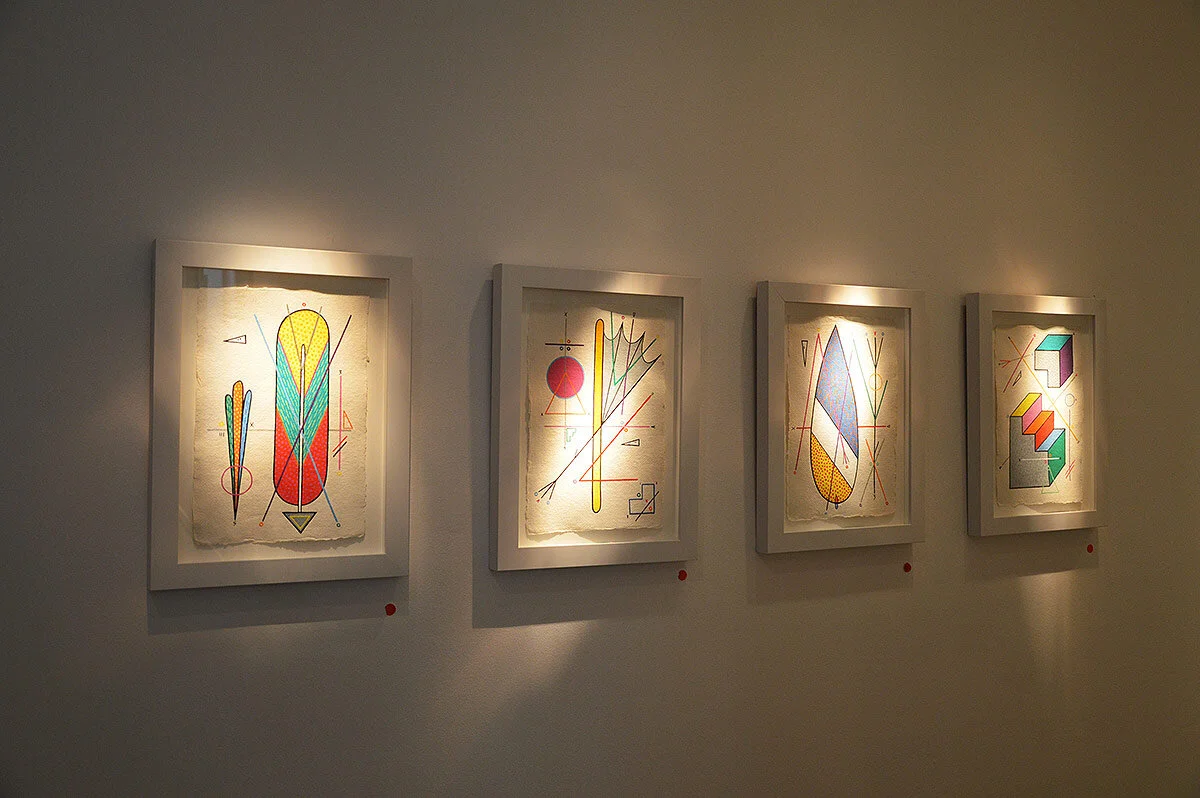
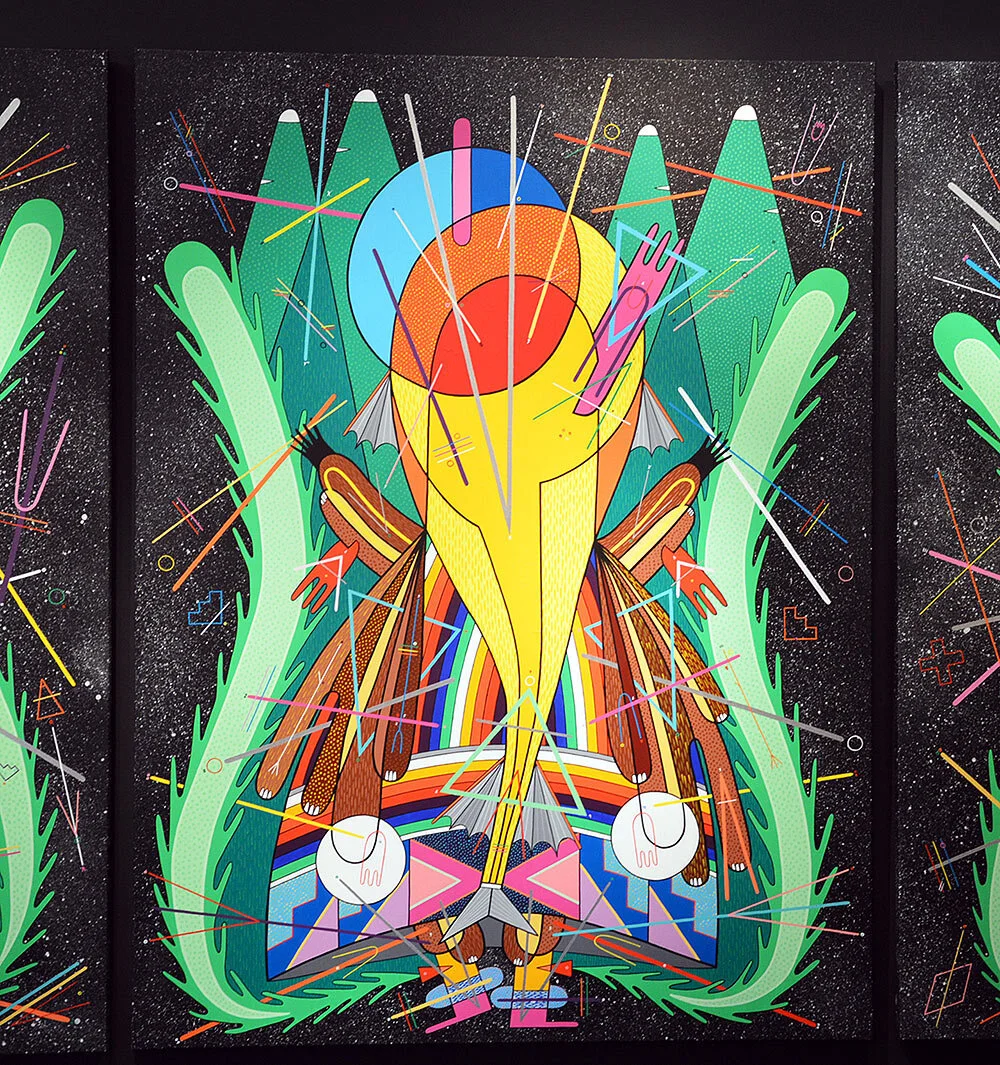
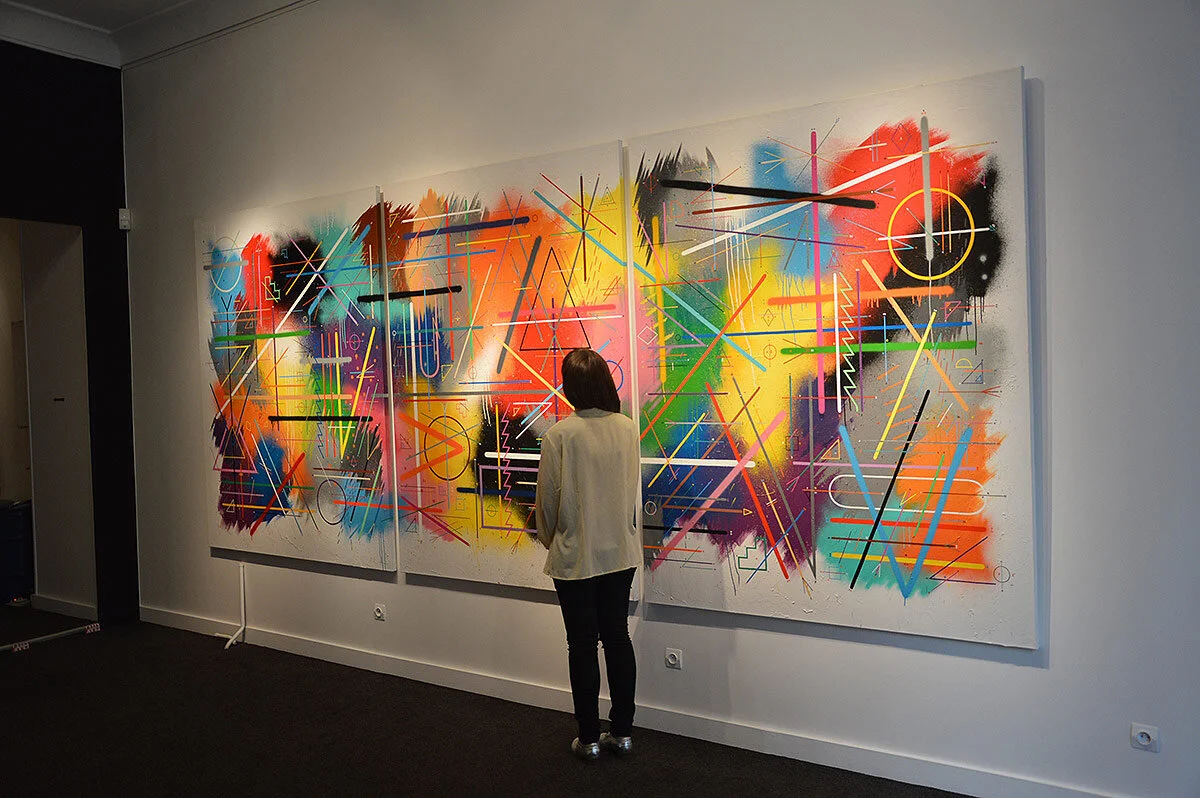
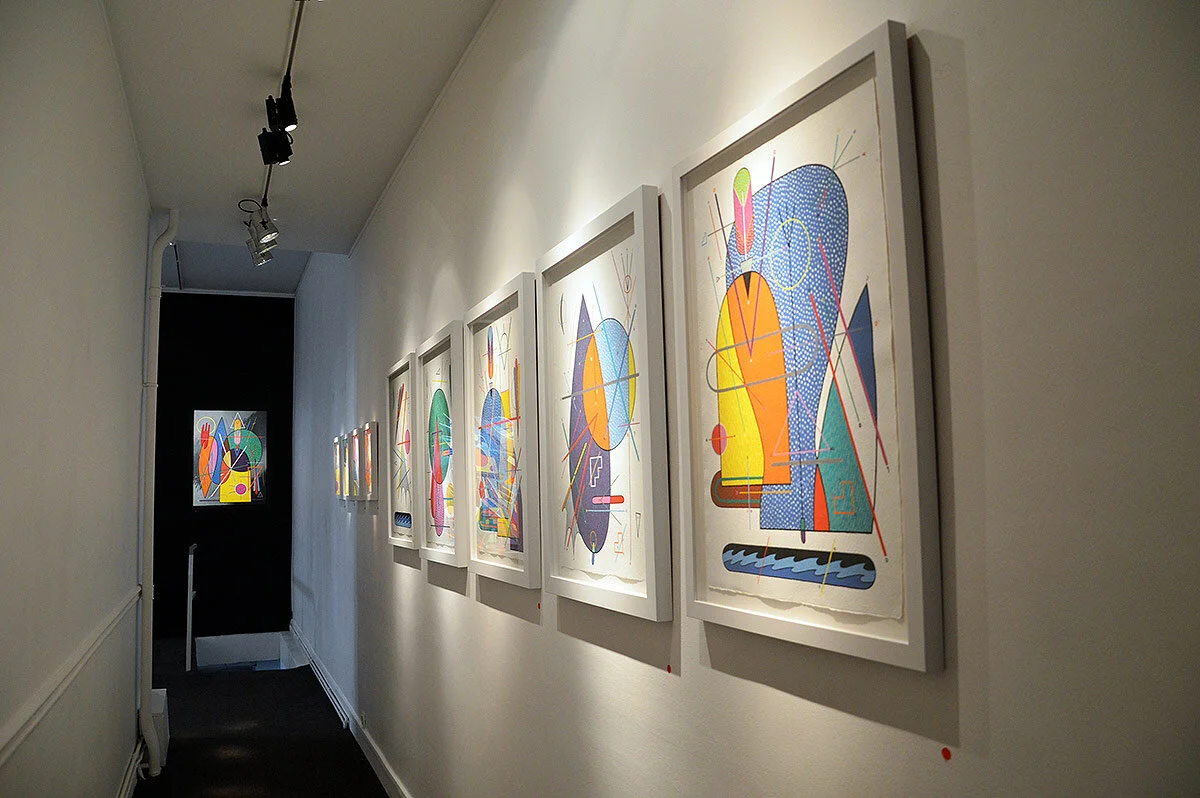
My paintings were shaped by dance and I made two series inspired by some of the most popular myths and legends from around the world, the dances of water and of the sky.
In heaven the birdman and all the different concepts that come with it. The countless cultures where winged beings exist, some as famous as the plumed serpent or the great “Wiracocha”. I also worked with creatures emerging from the depths of the seas, lakes and wells. Beings with fish heads or bodies, coming out of the water to dance or to charm those who came close to these places. “The Golden Fish” (Edited by Helena Usandizaga) is considered by many to be the bible of indigenismo, a book about these references which influenced my documentation and for which I was honored to illustrate the cover.
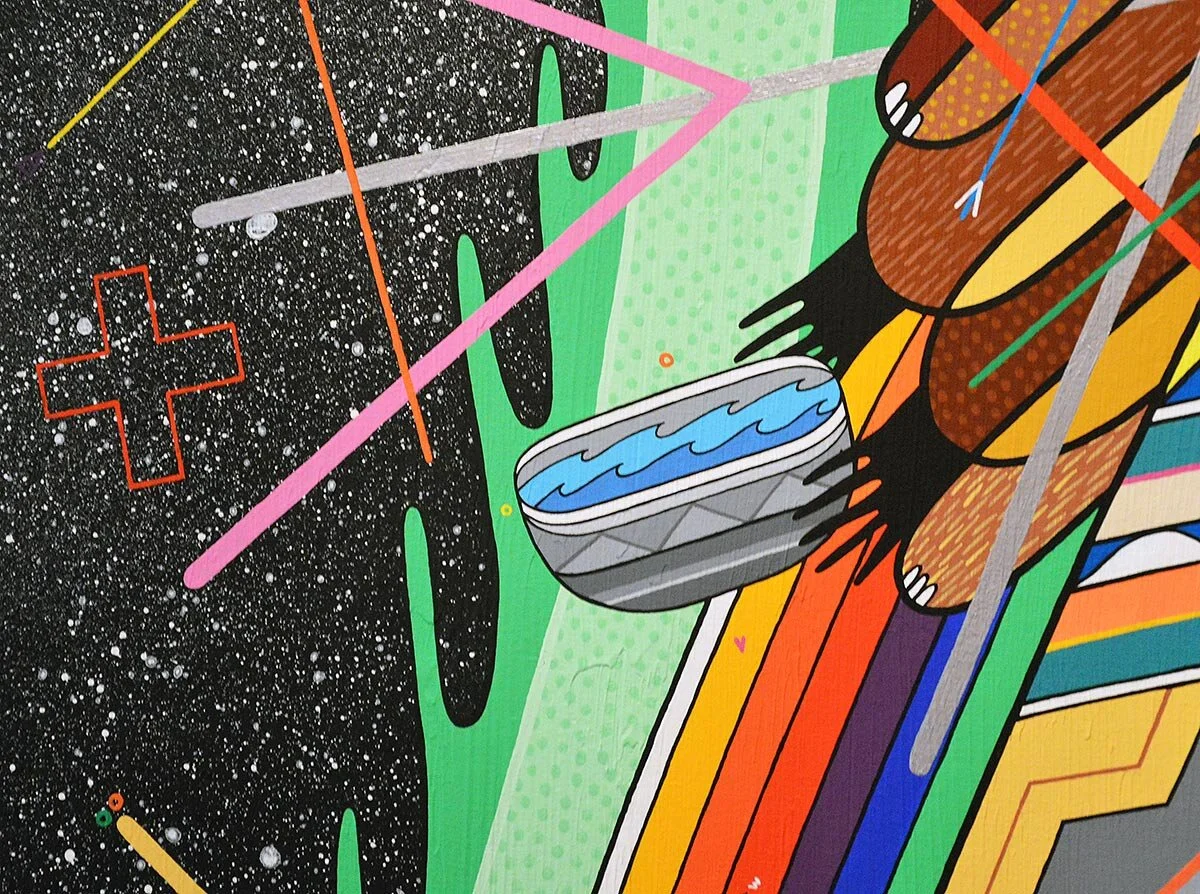
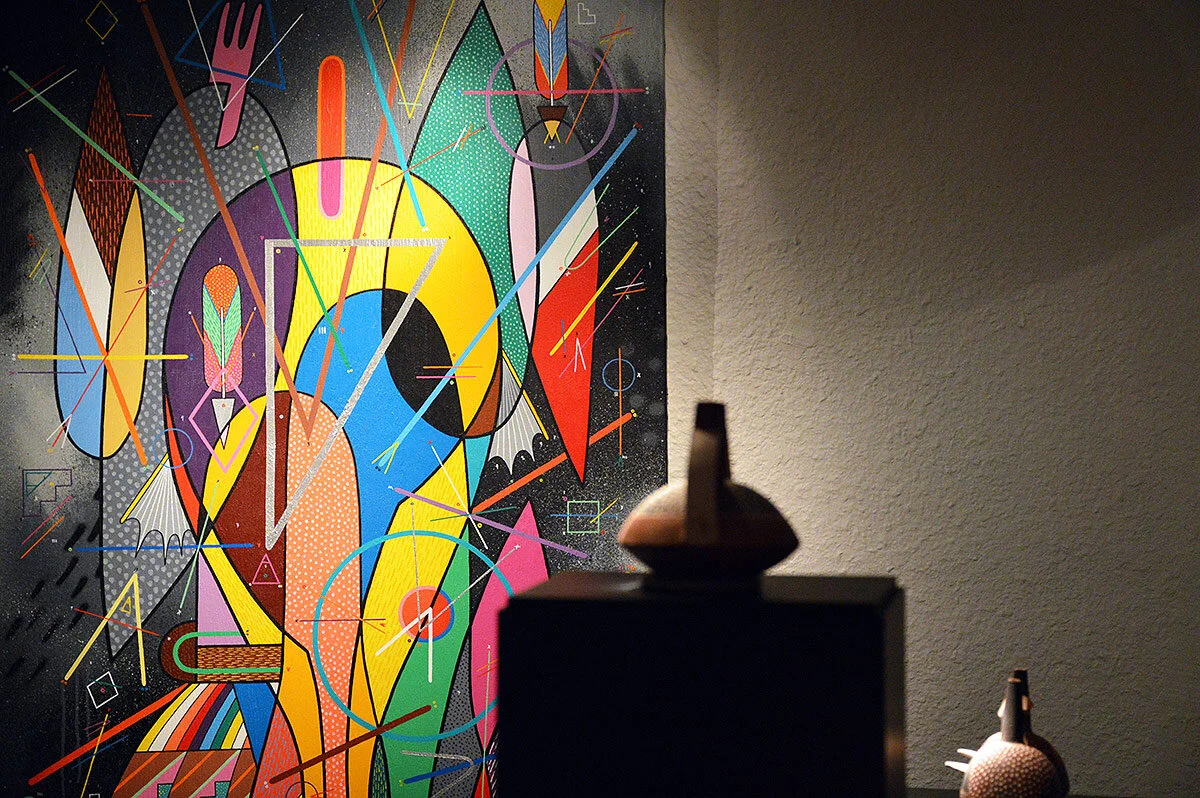
With abstraction as a tool to shape altered states of consciousness, these trips helped by magical or educational plants elevate human beings and make them reflect on the depths of their beings, allowing them to merge with everything around them, in an explosion of colors and linear and geometric shapes that dematerialize at different stages.
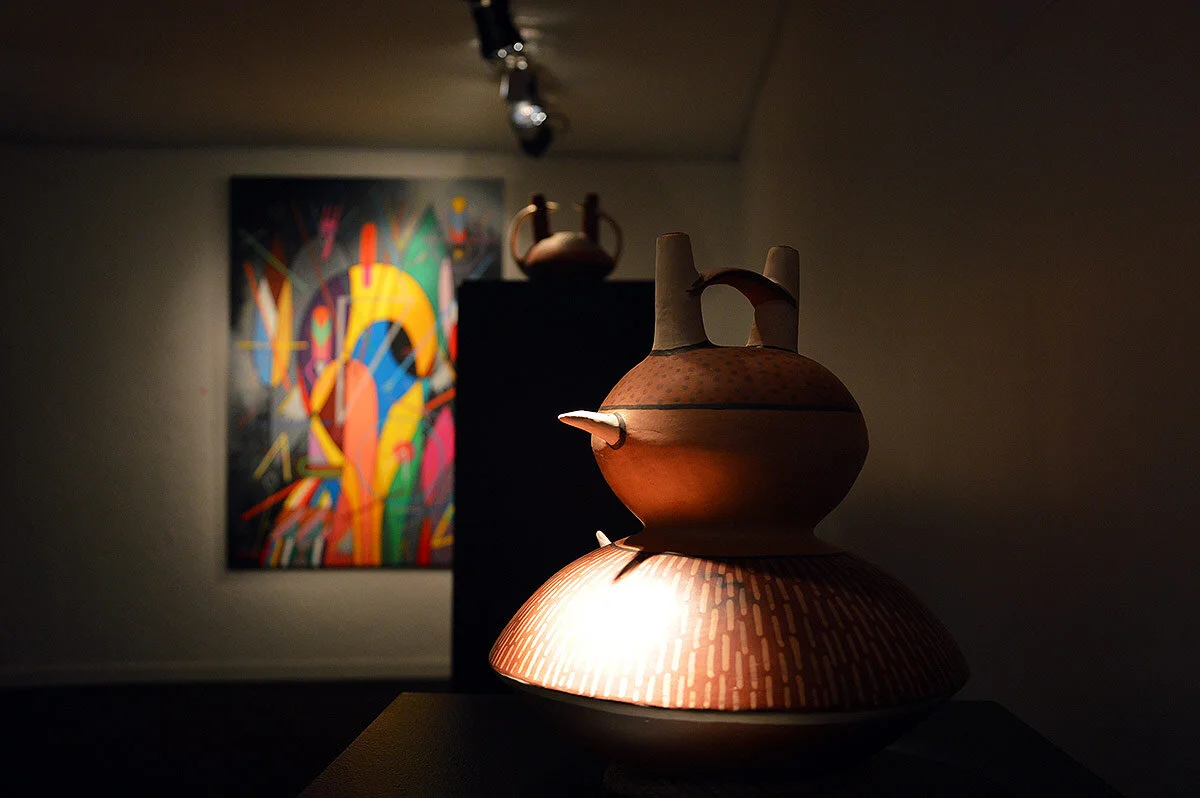
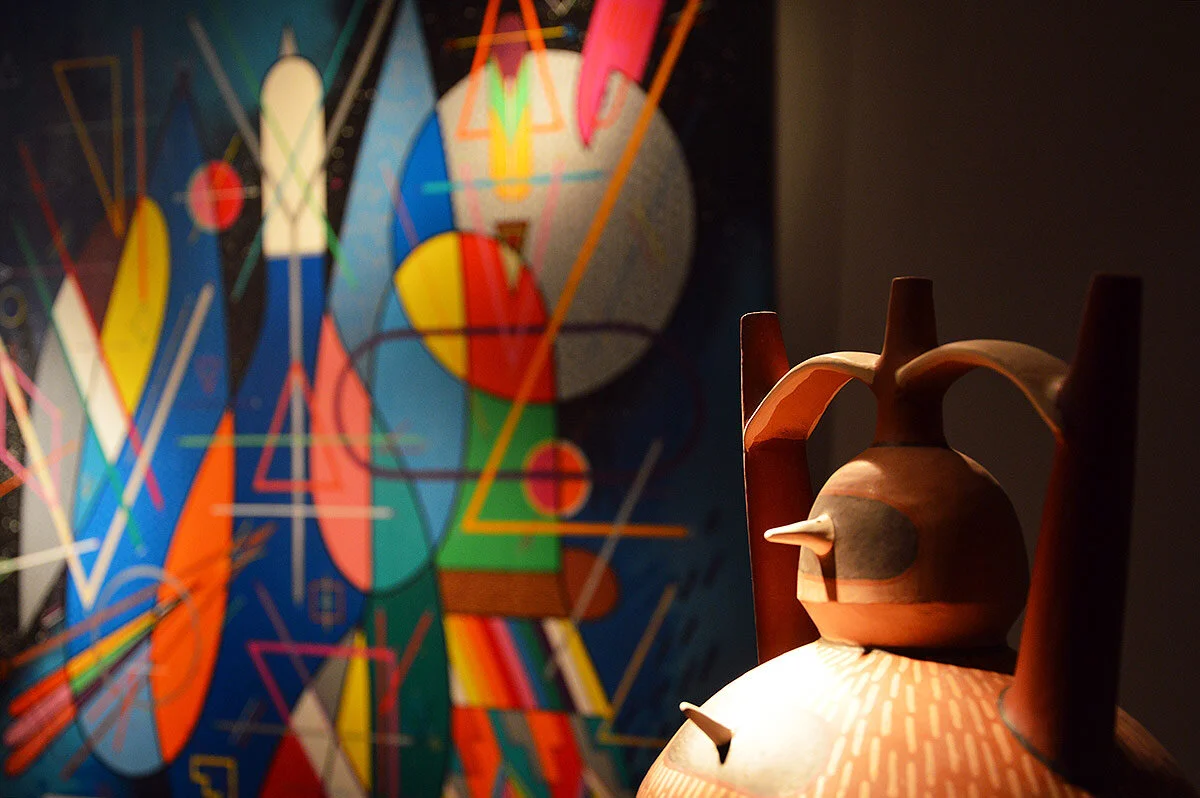
For sculpture, I worked with ancient Peruvian techniques, with the idea of combining two worlds to create pieces that speak of tradition and present-day, and at its core, the union with the Cosmos and the Universe.
Nasca is a place known worldwide for the Nasca lines, which in 1994 was declared a World Heritage by UNESCO. They are composed of an infinite number of shapes and patterns that extend thousands of kilometers across the grasslands at different points. Students of the Unidad Académica of the Universidad of Nasca that investigate and defend cultural heritage, say without a doubt that they were sacred paths and not just lines. But the Nasca were also great potters, with a very distinctive style, rich in color and immense beauty. In my opinion, one of the most beautiful cultures in Peru along with the “Mochica”.
When I returned to this land, I had the opportunity to work in the patriarchal workshop of the Gallegos family, with his son Zeno Gallegos as my teacher. This family, with extensive experience in ceramics, initiated the rebirth of Nasca art from 1968 to the present, investigating this ancient technique and elevating it as in artform.
After two years I was able to resume working where I had left off and continue to learn the art of Nascan ceramics, in which I seek to give a new contemporary vision while respecting their original forms. In this new series of pieces, the ceramics are more complex than the last ones I made in Nasca, and as a result, their evolution can be appreciated.
Other techniques that I have worked with over the past several years have been tapestries and Quipus developing different pieces between Peru and Barcelona. In Peru, I traveled to San Pedro de Cajas a place which is referred to as the Capital of Textile Arts. Here I worked with the teacher Luis Nesquin Pucuhuaranga Espinoza, an artist with a great tradition in the tapestry world that specialized is hyperrealism, but is a master of many other textile techniques as well. I made different pieces containing Mother Nature’s two most repeated symbols, points and lines with him. These elements are enshrined in many of my works of art and have been for years.
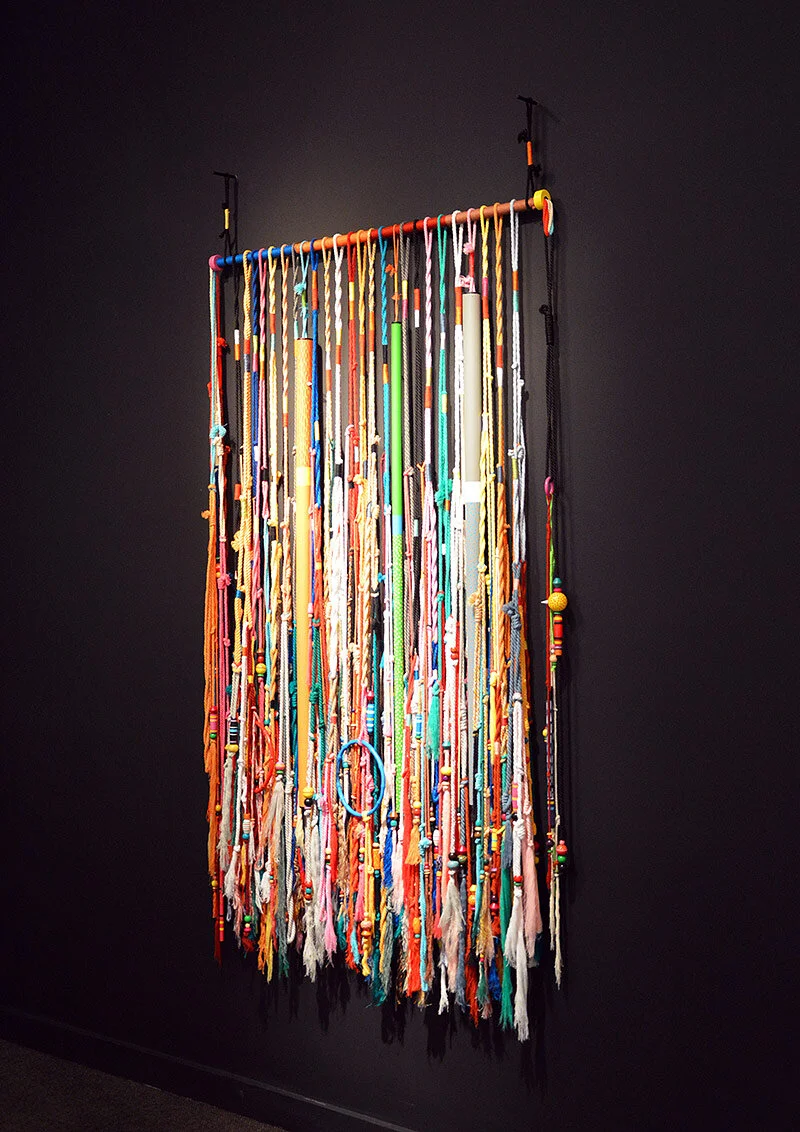
In the second stage, now in Barcelona, I made the back of the tapestries that were produced in San Pedro de Cajas, assembling cumulatively. In the compositions, I used different materials: hand-dyed sheep wool with natural pigments, cotton ropes of different thicknesses and colors and strips of wood painted with different motifs, which created different textures and depths, a contrast with its symbolic other side.
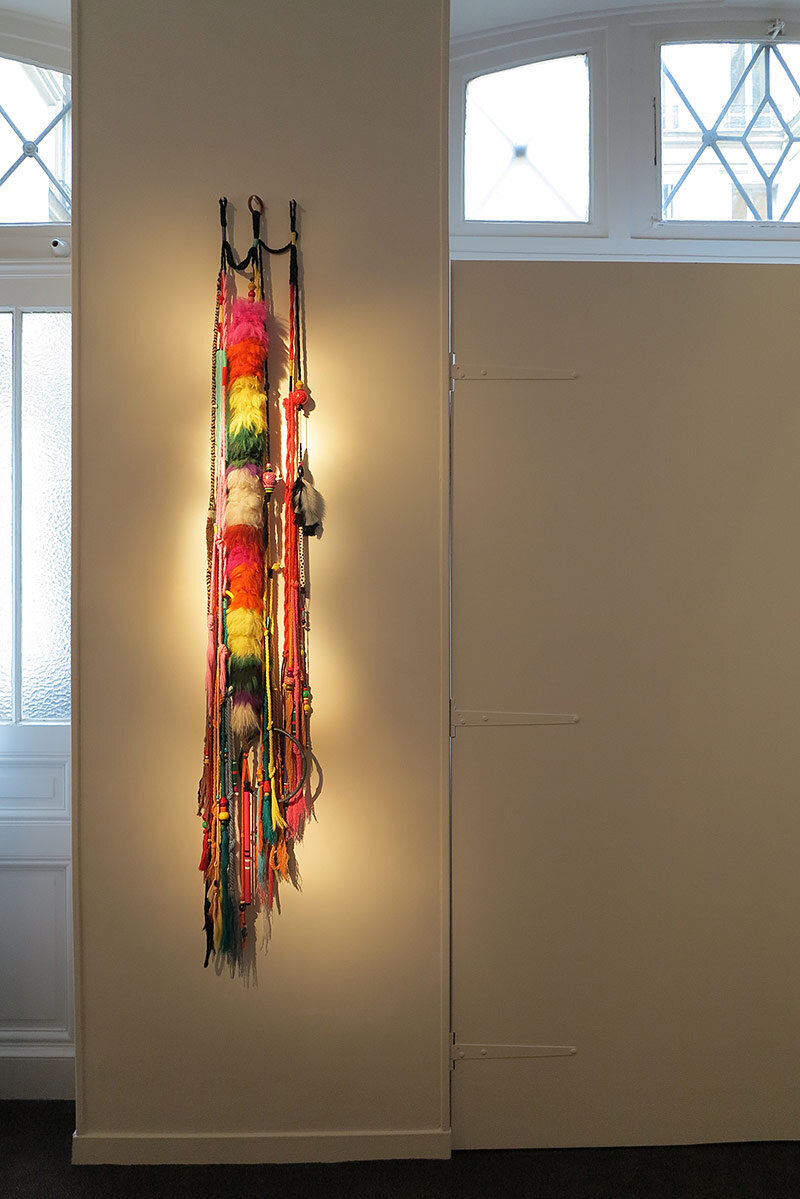
Quipus are known primarily for their usefulness in administrative aspects of the Incan empire. All economic and social aspects of the Empire were managed with them and the chains were made of llama, alpaca or cotton. The position of nodes and numbers indicated numerical values in a decimal system. The different color bones, in turn, indicated which item was counted, and for each activity (agriculture, military, engineering, etc.) there was an appropriated color.
After analyzing several hundred quipu, it has been shown that most information on the quipu is numeric, but there are also many studies that point to its use as a writing tool.
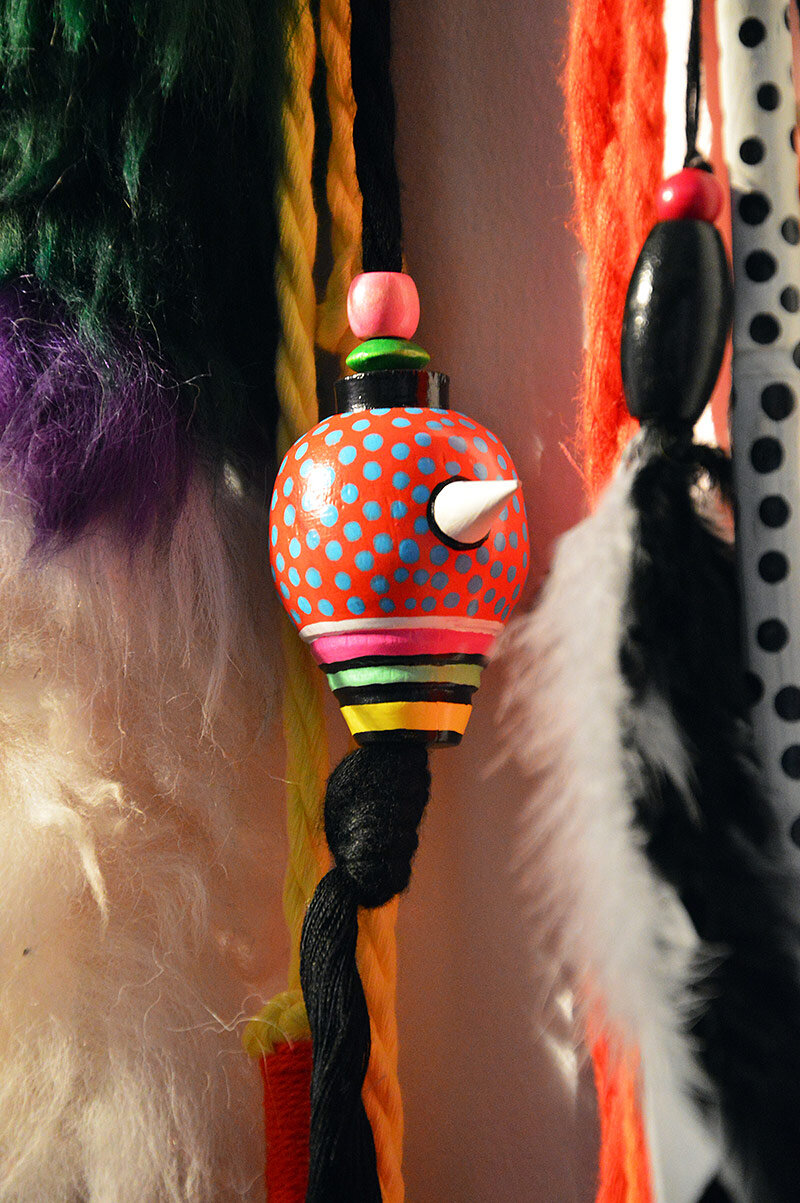
In this series of Quipus made in Barcelona, I wanted to reflect the beauty of this great object, under a contemporary visión and revalidating once again an element of the great Andean cultures. In the process I used “quipucamayoc” knots and incorporated various techniques such as fraying ropes and nooses, as a reference to the dance of the rope of the “Mochica” culture. Other elements are the wooden beads which represent a numerical system in which different colors, shapes and linear symbols are involved. All quipus are held up by a bar. This was not common in the original Quipus but some Quipus have been found suspended on a wooden bar, which is why I used this in my pieces. Everything put together lifts the tradition to a new dimension.